1

The Diary of a Hunter from the Punjab to the Karakorum Mountains — Background and Themes
(0 User reviews)
1079
Project Gutenberg
2013
Not confirmed
India -- Description and travel; Irby, Augustus Henry -- Diaries; Hunting -- India
Readers of public-domain and historical texts
Project Gutenberg digital edition
en
Edition facts
Words
107,045
Reading time
466 min
Text sections
9
Before opening The Diary of a Hunter from the Punjab to the Karakorum Mountains — Background and Themes, the edition data offers a quick orientation: 107,045 words, 7 hr 46 min estimated reading time, and 9 detected text sections.
The text analysis averages about 24.9 words per sentence, while the detected sections provide another way to judge how the source is divided.
Project Gutenberg metadata also associates the work with “India -- Description and travel,” connecting these edition facts with the source record’s subject description.
Source:
Project Gutenberg record #42674
Irby's posthumously published journal records a six-month hunting expedition from Amritsir to the Karakorum Mountains in 1860, with precise observations of terrain, local encounters, and the practical challenges of shikar.
Read the complete public-domain text at its original source.
Read on Project GutenbergAugustus Henry Irby's journal opens with a frank admission of his own inconsistency as a diarist: he has been on the road for thirteen days before making his first entry. This self-awareness sets the tone for a record that is less a polished travelogue than a working document, filled with the minutiae of provisioning, the negotiation of local guides, and the physical demands of moving through the Pir Panjal range. The diary was never intended for publication; it was compiled by his brother after Irby's death, and the text retains the immediacy of notes written in the field.
A Journal Kept in Spite of Itself
Irby begins by confessing that previous attempts at diary-keeping have failed, and he is uncertain whether this one will persist. This opening is not a rhetorical flourish but a genuine expression of the difficulty of maintaining a written record while traveling. The diary form itself becomes a subject of the narrative: entries are irregular, sometimes compressed, and often interrupted by the demands of the hunt. The reader is given the sense of a man who writes when he can, not when he plans to. This structural feature—the diary as an improvised, sometimes reluctant document—shapes the entire work. Irby does not impose a retrospective order on events; instead, he records them as they happen, with all the digressions and dead ends that implies. The result is a text that feels less like a finished book and more like a set of field notes, valuable precisely because of its lack of polish.
Movement Between Scenes: The Rhythm of the March
The diary's structure is driven by the physical movement of the expedition. Irby records each day's progress in terms of distance, terrain, and the condition of his party. The narrative moves from camp to camp, with little connective tissue between entries. This gives the book a staccato rhythm: one day's entry ends with preparations for the next morning, and the following entry begins with the inevitable delays—coolies arriving late, a guide failing to appear, a horse deemed too feeble to ride. Irby frequently walks when mounts are unsatisfactory, and his descriptions of the landscape are often tied to the practicalities of route-finding. The journey is not a smooth progression but a series of obstacles, each overcome with varying degrees of success. The reader experiences the expedition as a sequence of immediate challenges rather than a planned itinerary.
Recurring Images: Altars, Horns, and the Marks of Hunters
Throughout the diary, Irby notes the physical traces left by other hunters and by local religious practice. In one passage, he stops to examine 'singular altar-like buildings' topped with the horns of wild sheep, speculating that they may be offerings from successful hunters. This image recurs: the landscape is marked by the presence of those who have come before, both in the form of these structures and in the stories Irby hears from guides. The horns are a tangible record of past hunts, and Irby's own expedition will add to that record. These details anchor the narrative in a specific material world, where the success of a hunt is measured not only in game taken but in the marks left behind. The diary itself becomes another such mark—a written record of a journey that, like the horns on the altars, testifies to the hunter's passage.
The Unreliable Guide: Local Knowledge and Its Limits
Irby's interactions with local guides form a recurring thread in the diary. Guides are promised but fail to appear; they lead him onto wrong paths; they provide information that proves unreliable. In one instance, a guide 'fully corroborated' reports of abundant game, only to lead the party onto a wrong track. Irby's tone is matter-of-fact rather than frustrated; he accepts these setbacks as part of the enterprise. The guides themselves are often unnamed, their knowledge partial and their motivations unclear. This creates a sense of the expedition as a negotiation between Irby's own plans and the unpredictable human landscape through which he moves. The diary does not romanticize the figure of the native guide; instead, it presents a series of practical encounters, each with its own complications.
Irby's diary is best read as a working document, not a finished narrative. The reader should expect gaps, repetitions, and the occasional abrupt shift in subject. The value of the text lies in its unpolished immediacy: the details of equipment, the physical strain of the march, the fleeting encounters with local people. It is a record of a journey that was, for its author, primarily a hunting expedition, and the diary never loses sight of that purpose.
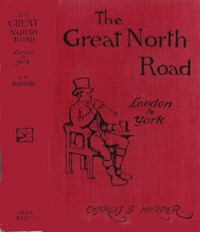
That rainy afternoon, I kept returning to Irby’s map—the silent, patient names of passes that ended, abruptly, in snow. He never pretends the road was easy, only that it existed, day by day. That same quiet trust in worn paths surfaced later, almost by accident, in The Great North Road, the Old Mail Road to Scotland: London to York — Text and Context—another journey measured not in triumph but in steady human steps.
There are no reviews for this eBook.
There are no comments for this eBook.
Reader reflection
Take a moment to reflect on this book
Create a short personal record of your experience with this book.
Your progress
0
/
10
2
Did this book hold your interest?
3
Would you pass this book on to a friend?
4
How much effort did this book require?
5
How did the reading compare with what you expected?
6
How distinctive were its ideas or approach?
7
How would you describe its reading pace?
8
Did any part of the book feel personally relevant?
9
What is the main idea you are taking away?
10