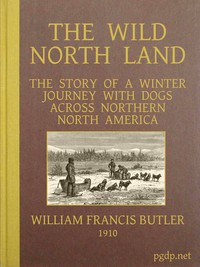
The Wild North Land The Story of a Winter Journey with Dogs across Northern North America — Inside the Classic
Edition facts
This digital edition of The Wild North Land The Story of a Winter Journey with Dogs across Northern North America — Inside the Classic is described by source-level measurements including 86,506 words, 6 hr 17 min estimated reading time, and 35 detected text sections.
The text analysis averages about 27.8 words per sentence, while the detected sections provide another way to judge how the source is divided.
Project Gutenberg metadata also associates the work with “Northwest, Canadian -- Description and travel,” connecting these edition facts with the source record’s subject description.
Calculated from edition completeness, EPUB availability, text structure and catalogue metadata. Not a user rating.
How this score is calculated
- Description quality20 pts
- Title & short description10 pts
- Source metadata20 pts
- Text length15 pts
- Chapters / structure15 pts
- EPUB file integrity20 pts
Total of 100 points, scaled to a 2.5-5.0 range. Editions with an empty description or a missing EPUB file are not scored.
Read the Text
PAGE The Situation at Home--The West again--A Land of Silence 1
Powder versus Primroses--The American Lounger--“Home, sweet Home” 8
Fort Garry under new aspects--Social Societies--An old Friend--Pony “the perverse” 12
The Wilderness--A Sunset Scene--A white Savage--Cerf-Vola the Untiring--Doggerel for a Dog--The Hill of the Wolverine--The Indian Paradise--I plan a Surprise--Biscuits and Water 21
The Forks of the Saskatchewan--A perverse Parallel--Diplomatic Bungling--Its Results 36
Our Winter Home--A Welcome--I start again--The Hunter’s Camp--In quest of Buffalo on the Plains--“Lodge-poling” leads to Love 43
An Ocean of Grass--The Red Man--Whence comes he?--The Buffalo--Puritans and Pioneers--The Red Man’s Friend 49
Buffalo Hunts--A Picture once seen long remembered--L’Homme capable--A wonderful Lake--The lost Indian--An Apparition--We return Home 57
Strange Visitors--At-tistighat the Philosopher--Indian Converts--A Domestic Scene--The Winter Packet--Adam and his Dogs 70
A _tale_ of Warfare--Dog-sleds--A Missing Link--The North Sea--“Winterers”--Samuel Hearne 83
A Dog of no Character--The Green Lake--Lac Ile à la Crosse--A Cold Day--Fort Ile à la Crosse--A long-lost Brother--Lost upon the Lake--Unwelcome Neighbours--Mr. Roderick Macfarlane--“A beautiful Morning”--Marble Features 95
The Clearwater--A bygone Ocean--A Land of Lakes--The Athabasca River--Who is he?--Chipewyan Indians--Echo--Major succumbs at last--Mal de Raquette 118
Lake Athabasca--Northern Lights--Chipewyan--The real Workers of the World 137
A Hudson’s Bay Fort--It comes at last--News from the outside World--Tame and wild Savages--Lac Clair--A treacherous Deed--Harper 143
The Peace River--Volcanos--M. Jean Batiste St. Cyr--Half a Loaf is better than no Bread--An oasis in the Desert--Tecumseh and Black Hawk 158
The Buffalo Hills--A fatal Quarrel--The exiled Beavers--“At-tal-loo” deplores his Wives--A Cree Interior--An attractive Camp--I camp alone--Cerf-vola without a Supper--The Recreants return--Dunvegan--A Wolf-hunt 171
Alexander Mackenzie--The first Sign of Spring--Spanker the Suspicious--Cerf-vola contemplates Cutlets--An Indian Hunter--“Encumbrances”--Furs and Finery--A “Dead Fall”--The Fur Trade at both Ends--An old Fort--A Night Attack--Wife-lifting--Cerf-vola in Difficulties and Boots--The Rocky Mountains at last 191
The wild Animals of the Peace River--Indian Method of hunting the Moose--Twa-poos--The Beaver--The Bear--Bear’s Butter--A Bear’s Hug and how it ended--Fort St. John--The River awakes--A Rose without a Thorn--Nigger Dan--A threatening Letter--I issue a Judicial Memorandum--Its Effect is all that could be desired--Working up the Peace River 206
Start from St. John’s--Crossing the Ice--Batiste le Fleur--Chimeroo--The last Wood-buffalo--A dangerous Weapon--Our Raft collapses--Across the Half-way River 225
Hudson’s Hope--A Lover of Literature--Crossing the Peace--An unskilful Pilot--We are upset--Our Rescue--A strange Variety of Arms--The Buffalo’s Head--A glorious View 236
Jacques, the French Miner--A fearful Abyss--The Great Cañon of the Peace River--We are off on our Western Way--Unfortunate Indians--A burnt Baby--“The Moose that walks” 247
Still Westward--The Dangers of the Ice--We enter the main Range--In the Mountains--A Grizzly--The Death of the Moose--Peace River Pass--Pete Toy--The Ominica--“Travellers” at Home 263
The Black Cañon--An ugly Prospect--The vanished Boat--We struggle on--A forlorn Hope--We fail again--An unhoped-for Meeting and a Feast of Joy--The Black Cañon conquered 279
The Untiring over-estimates his Powers--He is not particular as to the Nature of his Dinner--Toil and Temper--Farewell to the Ominica--Germansen--The Mining Camp--Celebrities 294
Mr. Rufus Sylvester--The Untiring developes a new Sphere of Usefulness--Mansen--A last Landmark 304
British Columbia--Boundaries again--Juan de Fuça--Carver--The Shining Mountains--Jacob Astor--The Monarch of Salmon--Oregon--“Riding and Tying”--Nation Lake--The Pacific 310
The Look-out Mountain--A gigantic Tree--The Untiring retires before superior Numbers--Fort St. James--A strange Sight in the Forest--Lake Noola--Quesnelle--Cerf-vola in civilized Life--Old Dog, good-bye! 327
Dog-Train for the North _Frontispiece_
PAGE Cerf-Vola, the Esquimaux Dog 16
View from the Spathanaw Watchi 31
“Our Hut at the Forks of the Saskatchewan” 43
Sunset Scene, with Buffalo 57
Tent in the Great Prairie 69
The Valley of the Peace River 158
Alone in the Wilderness 181
Clinging to the Canoe 239
Mount Garnet Wolseley and the Peace River 266
Cutting up the Moose 271
Running stern foremost the Black Cañon 283
“The Look-out Mountain” 327
The Situation at Home.--The West again.--A Land of Silence.
There had never been so many armies in England. There was a new army, and there was an old army; there was an army of militia, an army of volunteers, and an army of reserve; there were armies on horse, on foot, and on paper. There was the army of the future--of which great things were predicted--and far away, lost in a haze of history (but still more substantial than all other armed realities, present or future), there lay the great dead army of the past.
It was a time when everybody had something to do with military matters, everybody on the social ladder, from the Prime Minister on the topmost round to the mob-mover on the lowest.
Committees controlled the army, Departments dressed it, Radicals railed at it, Liberals lectured upon it, Conservatives condemned it, Peers wrote pamphlets upon it, Dukes denounced it, Princes paraded it, and every member of Parliament who could put together half a dozen words with tolerable grammatical fluency had something to say about it.
Surely such a period must have been one in which every soldier would have recognized the grandeur and importance of his profession, and clung with renewed vigour to a life which seemed of moment to the whole British nation. But this glowing picture of the great “nation of shopkeepers,” suddenly fired by military ardour, had its reverse.
The stream of advancement slowly stagnating under influences devised to accelerate it, the soldier wearied by eternally learning from masters the lesson he could have taught, the camp made a place of garrison routine and not of military manœuvre, the uniform harness which had galled a Burton, a Palgrave, a Ruxton, and a Hayward, from ranks where the spirit of adventurous discovery sickened under chilling regulation--this harness made more unrelaxingly irksome; a system of promotion regulated by money--the offspring, it is true, of foul corruption, but which had become not a little purified by lapse of time; this system, supplanted by one of selection theoretically pure, but destined to fall into that lowest of all corruptions, the influence of political jobbery: all this formed the leading features in that order of things, old and new, which the spectacle of a neighbouring nation, struck suddenly to the ground by a mighty army, had caused the panic-stricken British people to overhaul and to reconstruct.
Taken any way one can, an army on paper is not a satisfactory profession. It is subject to sudden and unlooked-for bursts of military zeal; it is so bent upon nervously asserting itself fit for anything; it is from its nature so much akin to pen, ink, and envelope of a common-place type; it has such disagreeable methods of garrisoning the most pestilential spots upon the earth, and abandoning to republican bluster whole continents called colonies; those who shape its destinies are so ready to direct it against matchlock monarchs and speared soldiery; while arms are folded before those conflicts which change the past and future of the centuries; all these considerations go a great way towards making the profession of arms, on paper, at any time an anomaly.
But when there was also present to the memory of one who thus regarded the new order of military life, the great solitudes, the inland oceans, the desolate wilds, the gloomy forests of a far-away land, through which his former wanderings had carried him; when thought re-sought again those vast regions of the earth where Nature has graven her image in characters so colossal, that man seems to move slowly amidst an ocean frozen rigid by lapse of time, frozen into those things we name mountains, rivers, prairies, forests; man a mere speck, powerless so far to mark his presence, in blur of smoke, in noise of city, in clash of crank, or whirl of wheel: when these things came back in pictures touched by the soft colours Memory loves to limn with, there were not wanting dull professional outlooks and dearth of service to turn the footsteps gladly into the old regions again, there to trace new paths through the almost exhaustless waste which lies between the lonely prairies of the Saskatchewan and the icy oceans of the North.
What shall we call this land to those who follow us into its depths?
It has prairies, forests, mountains, barren wastes, and rivers; rivers whose single lengths roll through twice a thousand miles of shoreland; prairies over which a rider can steer for months without resting his gaze on aught save the dim verge of the ever-shifting horizon; mountains rent by rivers, ice-topped, glacier-seared, impassable; forests whose sombre pines darken a region half as large as Europe; sterile, treeless wilds whose 400,000 square miles lie spread in awful desolation. How shall it all be called?
In summer, a land of sound, a land echoing with the voices of birds, the ripple of running water, the mournful music of the waving pine-branch; in winter, a land of silence, a land hushed to its inmost depths by the weight of ice, the thick-falling snow, the intense rigour of a merciless cold--its great rivers glimmering in the moonlight, wrapped in their shrouds of ice; its still forests rising weird and spectral against the Aurora-lighted horizon; its notes of bird or brook hushed as if in death; its nights so still that the moving streamers across the northern skies seem to carry to the ear a sense of sound, so motionless around, above, below, lies all other visible nature.
If then we call this region the land of stillness, that name will convey more justly than any other the impress most strongly stamped upon the winter’s scene.
Powder _versus_ Primroses.--The American Lounger.--“Home, Sweet Home.”
It was just time to leave London. The elm-trees in the parks were beginning to put forth their earliest and greenest leaves; innumerable people were flocking into town because custom ordained that the country must be quitted when the spring is at its finest; as though the odour of primroses had something pestilential about it, and anything in the shape of violets except violet powder was terribly injurious to feminine beauty.
Youthful cosmopolites with waxed moustaches had apparently decided to compromise with the spring, and to atone for their abandonment of the country by making a miniature flower-garden of their button-holes. It was the last day of April, and ere the summer leaves had yellowed along the edge of the great sub-Arctic forest, my winter hut had to be hewn and built from the pine-logs of the far-distant Saskatchewan.
In the saloon or on the after-deck of a Cunard steamship steering west, one sees perhaps more of America’s lounging class than can be met with on any other spot in the world; the class is a limited one, in fact it may be a matter of dispute, whether the pure and simple lounger, as we know him in Piccadilly or Pall Mall, is to be found in the New World; but a three, or six, or twelve months’ visit to Europe has sufficiently developed the dormant instincts of the class in the New York or Boston man of business, to give colour to the assumption that Columbia possesses a lounger.
It is possible that he is a lounger only for the moment. That one glimpse of Bunker, one echo of Wall Street, will utterly banish for ever the semblance of lounging; but for the present the Great Pyramid _minus_ Bunker’s Hill, the Corso _minus_ Wall Street, have done something towards stamping him with the air and manner of the idler. For the moment he sips his coffee, or throws his cigar-end overboard, with a half-thoughtful, half-_blasé_ air; for the moment he has discovered that the sun does not rise and set exclusively in the United States, and that there were just a few shreds and patches of history in the world prior to the declaration of American independence: still, when the big ship has steamed on into the shallow waters which narrow into Sandy Hook or Plymouth Sound, and the broad panorama twixt Long Island and Staten, or Plymouth and Nahant opens on the view, the old feeling comes back with the old scenes again.
“Sir, the Bay of New York closely resembles the Bay of Naples.” There is not the slightest use in telling him that it is quite as like the Bey of Tunis, or the Hospodar of Bulgaria--so we let it be.
“There, sir, is Bunker’s Hill.”
“Ah, indeed!” drawled a genuine British lounger, with that superb ignorance only to be attained after generations of study, as he quietly scanned the ridge through his lazily-arranged eye-glass. “Bunker--who was Bunker? and what did he do on his hill?”
Yet, ere we hasten away to the North, another word anent our cousin. These things are, after all, the exception; the temptation to tell a good story, or what we may deem such, must not blind us to the truth; the other side of the question must not be forgotten. An English traveller in America will have so much to thank American travel for that he can well afford to smile at such things.
It was an American who painted for us the last scenes of Moorish history, with a colouring as brilliant as that which the Hall of the Lions could boast of in the old days of Grenada’s glory. To-day an American dwelling in Rome recalls for us in marble the fierce voluptuous beauty of the Egyptian Queen. Another catches the colouring of Claude, in his “Twilight in the Wilderness.” And if, as I have somewhere heard, it is to the writer of the ballad-song that true poetic fame belongs, that song which is heard at lonely camp-fires, which is sung by sailors at the wheel as the canvas-clouded ship reels on under the midnight gloom through the tumbling seas,--the song which has reached the heart of a nation, and lives for ever in the memory of a people,--then let us remember, when we listen to those wondrous notes on whose wings float the simple words, “Be it ever so humble, there is no place like home;” let us remember the land whose memory called them forth from the heart of an American exile.
And now we must away.
Fort Garry under new aspects.--Social Societies.--An Old Friend.--“Pony” the perverse.
The long, hot, dusty American summer was drawing to a close. The sand-fly had had his time, the black-fly had run his round, the mosquito had nearly bitten himself to death, and during that operation had rendered existence unbearable to several millions of the human race. The quiet tranquil fall-time had followed the fierce wasting summer, and all nature seemed to rest and bask in the mellow radiance of September.
It was late in the month of September, 1872, when, after a summer of travel in Canada and the United States, I drew near the banks of the Red River of the North. Two years had worked many changes in scene and society; a railroad had reached the river; a “city” stood on the spot where, during a former visit, a midnight storm had burst upon me in the then untenanted prairie. Three steamboats rolled the muddy tide of the winding river before their bluff, ill-shapen bows. Gambling-houses and drinking-saloons, made of boards and brown paper, crowded the black, mud-soaked streets. A stage-coach ran north to Fort Garry 250 miles, and along the track rowdyism was rampant. Horse-stealing was prevalent, and in the “city” just alluded to two murderers walked quietly at large. In fine, the land which borders the Red River, Minnesota, and Dakota, had been thoroughly _civilized_.
But civilization had worked its way even deeper into the North-west. The place formerly known as Fort Garry had civilized into the shorter denomination of “Garry;” the prairie around the Fort had corner lots which sold for more hundreds of dollars than they possessed frontage-feet; and society was divided in opinion as to whether the sale which called forth these prices was a “bogus” one or not.
Representative institutions had been established in the new province of Manitoba, and an election for members of Parliament had just been concluded. Of this triumph of modern liberty over primeval savagery, it is sufficient to say, that the great principle of freedom of election had been fully vindicated by a large body of upright citizens, who, in the freest and most independent manner, had forcibly possessed themselves of the poll-books, and then fired a volley from revolvers, or, in the language of the land, “emptied their shooting-irons” into another body of equally upright citizens, who had the temerity to differ with them as to the choice of a political representative.
Civilization had also developed itself in other ways. Several national societies had been founded, and were doing prosperously. There was a St. George’s Society and a St. Andrew’s Society, and, I think, also a St. Patrick’s Society. Indeed the memory of these saints appears to be held in considerable reputation in the New World. According to the prospectus and programme of these societies, charity appears to be the vital principle of each association: sick Scotchmen, emigrating English, and indigent Irish, were all requested to come forward and claim relief at the hands of the wealthier sons of St. Andrew, St. George, and St. Patrick. Charity, which is said to begin at home, and which, alas! too frequently ends there also, having thus had its commencement in the home circle, seemed determined to observe all home-like institutions; and the annual dinner was of necessity a very important item in the transactions of each society.
Amidst all these changes of scene and society there was one thing still unchanged on the confines of the Red River. Close to the stream, at the place known as the Point of Frogs, an old friend met me with many tokens of recognition. A tried companion was he through many long days of wintry travel. There, as fresh and hearty as when I had parted from him two years before, stood Cerf-vola, the Esquimaux dog who had led my train from Cumberland, on the Lower Saskatchewan, across the ice of the great Lakes. Of the four dogs he alone remained. Two years is a long time in the life of any dog, but still a longer period in that of a hauling-dog; and Cerf-vola’s comrades of that date, Muskeymote, Cariboo, and Tigre had gone the way of all earthly things.
To become the owner of this old friend again, and of his new companions Spanker and Pony, was a work of necessity; and I quitted the Point of Frogs by the steamboat “Selkirk” with three hauling-dogs in my possession. Strong and stout as of yore; clean-limbed, long-woolled, deep-chested; with ears pointed forward and tail close curled over his broad back, Cerf-vola still stood the picture of an Esquimaux.
Of the other two dogs, Pony was a half-breed, and Spanker, sharp, keen, and restless, was like his leader, a pure Husky; but, unlike the older dog, his nature was wild and fierce: some malignant guardian of his youth had despoiled him of the greater part of his tail, and by doing so had not a little detracted from his personal appearance.
As these three animals will be my constant companions during many months, through many long leagues of ice and snow, I have here sketched their outward semblance with some care. Civilization and a steamboat appeared to agree but poorly with my new friends. Spanker, failing in making his teeth emancipate his own neck, turned all his attention towards freeing his companion, and after a deal of toil he succeeded in gnawing Pony loose. This notable instance of canine abnegation (in which supporters of the Darwinian theory will easily recognize the connecting link between the Algerine captives assisting each other to freedom, &c., &c., after the manner of the Middle Ages), resulted in the absconding of the dog Pony, who took advantage of the momentary grounding of the steamer to jump on shore and disappear into the neighbouring forest.
It was a wild, tempestuous night; the storm swept the waters of the Red River until at length the steamboat was forced to seek her moorings against the tree-lined shore. Here was a chance of recovering the lost dog. Unfortunately the boat lay on the Dakota side, and the dog was at large somewhere on the Minnesota shore, while between the stormy water heaved in inky darkness. How was the capture to be effected?
As I stood on the lower deck of the steamboat, pondering how to cross the dark river, a man paddled a small skiff close to the boat’s side. “Will you be good enough to put me across the river?” I asked.
Butler opens his account of a winter journey across northern North America not with a grand declaration of purpose but with a confession: he had wanted to join the search for a lost African explorer, and when that fell through, he turned north. The preface sets a tone of restless, almost whimsical travel, quoting Tennyson's 'I cannot rest from travel' and describing a man who once walked to Jerusalem just to play ball against its walls. This framing matters because the narrative that follows is less a systematic expedition than a series of vivid, loosely connected episodes—crossings of frozen rivers, nights at fur-trade posts, encounters with Indigenous hunters and Métis fiddlers—held together by the steady rhythm of the dogsled and the recurring image of the northern landscape as a vast, silent, white expanse.
The Journey as a Sequence of Frozen Crossings
The book's structure is built around movement across ice. Butler repeatedly describes the act of crossing frozen rivers and lakes, and these crossings become the narrative's organizing principle. In one excerpt, he notes that after a long silence, 'the usual sound of rushing water broke strangely on the ear'—a rare interruption of the pervasive quiet. The ice is not static; it is in constant tension with the water beneath, and Butler observes 'deep pools of water lay on the surface of the ice, through which the dogs waded, breast deep, and the cariole floated like a boat.' This alternation between sliding on solid ice and wading through meltwater creates a physical rhythm that mirrors the journey's unpredictability. The reader is never allowed to forget that the frozen surface is temporary and treacherous.
Recurring Images: Silence, Light, and Sudden Noise
Butler's prose is punctuated by stark contrasts. Long stretches of silence are broken by sudden sounds: the rush of a hill stream, the fiddle and laughter at a fur-trade post. After traveling 'incessantly during four-and-twenty hours,' Butler arrives at Dunvegan, where 'within, in the huts, Swampy and Half-breed and Ojibbeway danced and fiddled, laughed and capered until the small hours of the morning.' This pattern—silent travel, then a burst of human noise—recurs throughout the excerpts. The landscape itself is described in terms of light and dark: 'glimmering lights' of a distant fort, the 'gyves of winter' holding the great river. These images give the narrative a visual pulse, alternating between the vast, empty whiteness of the snow and the small, warm glow of human habitation.
Movement Between Scenes: From Solitude to Social Encounters
The journey is not a continuous solo trek; it is a series of arrivals and departures. Butler moves from the solitude of the trail to the crowded, noisy interiors of trading posts. At Dunvegan, the contrast is sharp: outside, the dogs rest; inside, a party erupts. These social scenes are not digressions but essential counterpoints to the isolation of travel. Butler also includes historical interludes, such as the story of Alexander Mackenzie, who 'built himself a house not far below the spot where my recreant crew had found a paradise in the wilderness.' This layering of past and present—Mackenzie's solitary canoe alongside Butler's own dogsled—adds depth to the landscape. The reader is constantly shifting between the immediate sensory experience of the journey and the historical echoes that haunt the same ground.
The Fur Trade as a Backdrop of Movement and Exchange
Butler's narrative is threaded with observations about the fur trade, which he presents as a system of movement and exchange that has shaped the region. He traces its history from Tadousac to Fort William, noting how 'the first French adventurers had made Tadousac... the base of their operations' and how the trade 'passed to English hands' after 1762. These historical passages are woven into the travelogue, not as separate lectures but as context for the posts Butler visits. At Dunvegan, he notes that a McLeod of Skye named the fort after 'the wild, storm-swept fortalice' of his clan. The fur trade is not just an economic system; it is a network of human stories, of 'furs and finery,' of 'wife-lifting' and 'dead falls.' Butler's eye for detail—the 'recreant crew' finding paradise, the fiddling at night—keeps the trade's human scale in focus.
Readers should approach The Wild North Land as a travel narrative that values impression over itinerary. Butler does not provide a systematic account of his route; instead, he offers a series of vivid, often discontinuous scenes. Pay attention to the transitions—the moments when the sled stops, when the dogs wade through meltwater, when the fiddle starts. These are the hinges on which the narrative turns. The book rewards those who read for texture: the feel of ice, the sound of water, the sudden warmth of a crowded hut.
That rainy afternoon, Butler’s frozen rivers and sudden fireside bustle left me thinking about how solitude sharpens need. Weeks later, I found myself oddly drawn to a stranger’s tale of riding boxcars south, hungry and watchful—same bone-ache under different sun. I ended up with From North Carolina to Southern California Without a Ticket and How I Did It Giving My Exciting Experiences as a "Hobo" — Background and Themes open on my lap, warm tea forgotten.
Emma Campbell
2 weeks agoElla Thompson
3 weeks agoAnthony Moore
1 month ago-
Brian Williams - 1 month ago
{'rating': 5, 'text': "An epic tale of survival and adventure across the frozen north. Butler's prose is gripping as he recounts the challenges of traveling with dog sleds in the brutal Canadian winter. His observations of Indigenous peoples and wildlife add depth. A thrilling and historically significant read."} -
Bill Garcia - 1 week ago
{'rating': 2, 'text': "While the author's journey was certainly notable, his writing style is dated and often tedious. The book lacks introspection and focuses too much on mundane details of dog care and travel conditions. Hard to get through for the modern reader without a specific interest in the subject."} -
Monica Acosta - 1 week ago
{'rating': 3, 'text': "An interesting narrative of hardship and endurance, with vivid descriptions of the northern landscape. However, the story at times gets bogged down in repetitive details of travel logistics. Still, it's a worthwhile read for those interested in arctic exploration."}
What did you think of this book?
Answer a few questions and save a private reflection on this device.
Mia White
1 month ago