eBooks
94 Books foundWelcome to the LEAOP Public Domain Literature Library
This catalogue brings together ninety-four travel narratives and accounts of exploration, all drawn from the public domain. Each work offers a firsthand perspective on landscapes, peoples, and historical moments, ranging from the sixteenth to the early twentieth century. The collection is designed for readers who wish to encounter original voices from the past without modern interpretation.
Browsing the Catalogue
Visitors may browse the entire ebooks archive or explore curated categories. Four thematic groupings—Geography and Exploration—provide focused paths through the collection. Each category page offers a guided selection of three recommended works, along with explanations of why they belong together and how they differ from the other category. For a broader view, the archive lists all works alphabetically with full bibliographic details.
Book-Record Information
Every book record includes the title, author(s), publisher, and a note summarizing the work’s content and style. Keywords and target-reader fields help users quickly assess relevance. The catalogue note, written by the manuscript reviewer, draws attention to narrative voice, recurring themes, and the author’s choices in diction and description. These notes are intended to support, not replace, the reader’s own engagement with the text.
Source Attribution
All works in this catalogue originate from Project Gutenberg, a digital library of public-domain texts. The LEAOP edition adds editorial context but does not alter the original text. Each record links to the Project Gutenberg source, and the catalogue note is the sole addition by LEAOP. Readers are encouraged to verify copyright status before any further use.
Categories as Navigation Aids
The four categories—History, Empires & Change and Journeys into the Unknown—are not definitive literary judgments but practical groupings. The first category gathers works that situate travel within historical transformation: accounts of post-war reconstruction, colonial expansion, and shifting empires. The second category emphasizes exploration and discovery: expeditions to unmapped territories, encounters with unknown peoples, and the physical challenges of travel. Some works straddle both themes; the assignment is meant to guide rather than confine.
Three Practical Reading Paths
Path one: The American West. Start with The Seat of Empire (1870) for a vision of westward expansion, then read After the War: A Southern Tour (1866) for a contrasting view of the post-Civil War South, and finish with Journal of a Residence in America (1830s) for an outsider’s impression of Atlantic America. This path traces how different observers saw a nation in flux.
Path two: Expeditionary science. Begin with James's Account of S. H. Long's Expedition, part 1 (1819-20) for a scientific survey of the Rocky Mountains, continue with Through the Heart of Patagonia (1902) for natural history in South America, and conclude with Narrative of an Expedition Through the Upper Mississippi to Itasca Lake (1832) for the discovery of the Mississippi’s source. This path highlights the intersection of exploration, diplomacy, and natural science.
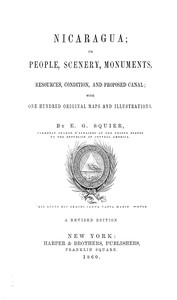
Path three: Global empire and encounter. Read Life on the Congo (1887) for a missionary’s view of Central Africa, then An Englishwoman in Angora (1922) for a journalistic account of Turkish nationalism, and finally Nicaragua (1860) for canal diplomacy in Central America. This path examines how travel writing shaped and reflected imperial ambitions.
Using the Catalogue
The LEAOP catalogue is a starting point for exploration. Each record provides enough context to decide whether a work merits a full reading. The absence of modern editorial commentary in the texts themselves preserves the original author’s voice. Readers are invited to browse, compare, and follow their own curiosity through the diverse landscapes and centuries represented here.
Bibliographic dates and catalogue measurements
The catalogue distinguishes the Project Gutenberg digital release from a work’s original or first publication. Project Gutenberg is identified as the digital source for the edition available here; its release year is therefore shown as Gutenberg Release Year, not as the work’s original publication year.
When an explicit first-publication or issue date can be supported directly by the title or issue information, it may be shown separately as First Publication Year. When that date cannot be confirmed, the catalogue displays Not confirmed rather than guessing a year.
Where the source text can be measured reliably, the catalogue may provide word count and estimated reading time. These measurements describe reading scope and are not quality rankings.
The current catalogue contains 4 active subject categories: Travel Narratives, Geography, Exploration, and Places Peoples. Categories are browsing aids and may overlap where a work reasonably fits more than one subject.