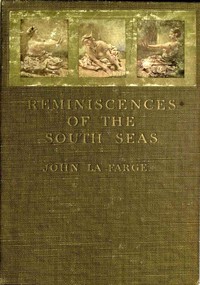
Reminiscences of the South Seas — A Reader’s Guide
Edition facts
For Reminiscences of the South Seas — A Reader’s Guide, the stored edition analysis reports 124,531 words, 9 hr 2 min estimated reading time, and 14 detected text sections.
The text analysis averages about 28.6 words per sentence, while the detected sections provide another way to judge how the source is divided.
Project Gutenberg metadata also associates the work with “Hawaii -- Description and travel,” connecting these edition facts with the source record’s subject description.
Calculated from edition completeness, EPUB availability, text structure and catalogue metadata. Not a user rating.
How this score is calculated
- Description quality20 pts
- Title & short description10 pts
- Source metadata20 pts
- Text length15 pts
- Chapters / structure15 pts
- EPUB file integrity20 pts
Total of 100 points, scaled to a 2.5-5.0 range. Editions with an empty description or a missing EPUB file are not scored.
Read the Text
ong cloud on our port. Now Oahu becomes clearer, and is distinctly violet or plum colour. The sea in front of it is blue, and dashed with white foam. Above, the clouds are in the more delicate greys and violets, and far up is a little rift of blue. To the right a large white triangular patch--an extinct volcano cone. Near the base of the mountains all is mist.
It is now 7:30. Birds, swallows, and sea-mews meet us; the swallows came early this morning. But until yesterday, for two days, there was no life except the flying fish.
We are very close, so close that I cannot draw except in panorama. All looks like cinders as we go on. Lovely cloud effects on the hills--rainbows--and the furthest edge of everything in this promontory daring all.
Then, as we round this, _with our first turn perhaps since we left_, we can see more mountains and hills--for the first time, right on the blue sea, a fringe of green (not yellowish)--the first time I have seen a fringe of green to deep blue sea.
Later we see beneath the great hills or mountains, that look like cinders, green bushes of trees, and houses looking pretty enough and cool--but we are still far off--and then behind this grey mountain with fringe of green we begin to feel Honolulu.
Big mountains, green valleys and slopes far back, a fringe of trees, some large buildings, a steamer’s smoke from some place, here and there masts--all this spread for miles, like an edging. As the space unfolds we see an immensely long beach (Waikiki) running at the base of the hills around a bay, and far off in the haze many masts. “White water” edges the sea everywhere, even before the line of ships. The water has calmed on which we now slip. There is no motion to it; no more, apparently, than would make a fringe of foam to a lake. A narrow channel in the surf, and we see the shipping and the port: steamships and sailing vessels, an English and an American warship, and we are in, and I am interrupted for the keys of the trunks.
Sunday morning, Nuuanu,
Nuuanu Valley, Honolulu.
Last night, after having tried the Hawaiian Hotel, we came up here and took possession of Judge Hartwell’s house, which we had seen in the afternoon.
We sat in the verandah, looking out toward the sea, I should say about two miles from us, with the same brilliant moonlight we had had the night before. The two palm trees in front of the house were gradually illuminated as if the whole air had been a stage scene, through the smoothly shining trunks glistening like silver, where the lower green stem of the bole leaf or branch of the tree beneath the branches separates from the lower cylinder. Behind them spread sky and ocean, for we are just on the summit of a hill, the sea-line spreading distinctly and the air being clear enough, (even when a slight drift of rain came down across the picture), to see the surf far out, and the lines of a great bar (to the right), which made a long hooked bend into the sea. Lights shone red on board of two English and American war vessels. Far off a few azure clouds on the horizon; and occasionally a white patch of cloud floated
like gauze over the palms, then sank away into the space shining far off--a little darker now than the sky, and warm and rather red in colour.
Meanwhile, the palm branches tossed up and down in the intermittent gale which blew from behind us in the great hills. The landscape was all below us, lying at the very foot of the palms which edge the hill upon which we are. Across the grass the moonlight came sometimes, as if a lamp had suddenly been brought in--and the colour of the half-yellow grass, which was not lost in the moonlight, urged on this delusion. Even the violet of the two pillars of palm and its silveriness were strong enough to make greener the colour of the sky.
When I walked out behind the house the hills were covered with cloud--I say covered, but rather the cloud rested upon them, and poured up into the sky, in large masses of white; the moon shining through most of the time, out of an opening more blue than the blue sky, itself an opaline circle of greenish blue light, with variant iridescent redness in the cloud edges. Against it the heavy trees looked as dark as green can be, and now and again the branches of other palms were like waves of grass against this dark, or against the sky all shining and brilliant. Occasionally it rained, as it did in the afternoon; the edges of the great cloud blew upon us like a little sprinkle of wet dust, and later, as it came thicker, the rustle of the palms was increased by the rustle of the rain. The grass of the hills shone as with moisture, but the grass outside, near us, was so dry that the hand put down to it felt no wet.
And I went off to bed under mosquito nettings, in a room that smelt of sandalwood, to sleep late and feel the gusts of wind blow through the open windows, and to think that it rained because I heard the palms.
Yesterday it rained very often. As we landed, the rain had begun, and the air was difficult to breathe with the quantity of moisture. All was wet, underfoot, though the wet, by the afternoon, had dried in this volcanic soil. We had been taken up to the home of Mr. Smith, Judge Hartwell’s brother-in-law, and decided at once upon going to housekeeping, for which we had to drive into town quite late; and we made out of our business a form of skylarking, I think to the astonishment of our guide and friend, who may have thought that persons who had been able to discuss seriously in the afternoon with himself and a member of the former cabinet, Mr. Thurston, the question of the sugar tariff, and its relation to the Force bill and the position of Mr. Blaine and of the Pennsylvania senators, should not be people to waste their minds on the dress of Hawaiian girls and the fashion of wearing flowers about the neck.
But the ride was full of enjoyment and novelty. Honolulu streets are amusing. The blocks of houses are tropical, with most reasonable lowness, and are of cement in facings; and the great number of Chinese shops and of Chinese, with some pretty Chinese girl faces and children’s faces, enliven the streets. And there are so many horses, small, with much mustang blood and good action and good heads, and ridden freely--too freely, for we saw a labourer ridden down by some cowboyish fellow. Hawaiian women rode about in their divided skirts; they had, as well as many of the men, flowers around their waists and their necks, and among their delights, peacock-feather bands around their hats. Many of them were pretty, I thought, with animated faces, talking to mild and fierce men of similar adornments. And as I said, there was much Chinese, and dresses of much colour--for men and women--and trees with flowers, like the Bougainvillia purplish rose coloured; grey palm trunks, and many plants of big leaves like the banana; yellow limes, and fiercely green acacias.
At any rate it was fun; we stopped and bought mangoes and oranges from natives who smiled or grinned at us. The air grew delicious with the wind that took away the oppression of the dampness, (we have about 80 to 83 degrees), so that if this be tropical, it is easy to bear, and the vast feeling of air and space gives a charm even to the heat.
I walked about this morning toward the hills, of which the near ones are covered with grass of a velvet grey in the light, and dun colour in the shade; but behind, the higher hills are purple and lost in the base of the cloud that has never ceased to turret them. After a while the sense of blue air became intense.
We sat up again and waited for the moon to rise, and watched her light drown the brilliancy of the stars and of the milky way. Jupiter shone like diamonds, and Venus was like a glittering moon herself; and beneath her in the ocean a wide tremulousness of light broke the great belt of water with a shine that anywhere else might have done for the reflection of the moon. The great palms threw up their arms into a coloured sky not quite violet nor quite green; the gale blew again from the mountains with the same intensity; the great cloud hung again up to the same point in the heaven until the moon began to beat its edges down, and break them and send them in blots of white and dark into the western sky. Then, at length, she came out again to sink behind the advancing cloud, which again broke, over and over again, and through the trees behind us and over the hills hung in a mass of violet grey. The wind blew more and more violently, but never any colder; always as if at the beginning of a storm, not as if any more than a long gust. And when the moon was free in the upper sky, and the cloud rested in its accustomed place, above the hills, we walked out into the open spaces to see the clouds lie in white masses of snow piled up, and above them to the north, the sky of an indefinite purple, terrible in its depth of uncertainty of colour, with no break, no cloud whatever.
Wednesday night we had rain, though only above us. Occasionally the clouds gained over in the southwest before us, but not entirely, and for a time the horizon of the sea was dusty and a little uncertain, but never at any moment did we fail to see the stars before us and the clear light of the sky. But we had to say good-bye to the moon. She will rise now so late that for us who are getting tired with a little more movement, there is impatience at having to watch; and, besides, the mosquitoes pour about us in swarms, unless we remain outdoors in the continual gusty surge of wind that makes us more and more sleepy.
Now the sky in the night becomes more purple and more violet as we look toward the south, instead of holding delicate blue-green, that promised the moon; and around Venus, until her setting, there is an area of light in this violet; and below her the sea is bright as if with a moon, and all the stars toward the south are brilliant and fiery.
Yesterday we drove up the valley. We ourselves are on a bank or projection into it, though the rocks rise to our left as we look northeast, which is the trend of the valley. Honolulu is below us, spread by the sea, and the valley goes up from it as do others; to the north and east there is a wide fringe or space by the sea, which is as a big slope, and into it these valleys open, so that, as we look back on our drive, that narrows more, we see the scene opening more and more and further and further below us, Honolulu and its plain or lower slope shining in light, with the sea beyond it, the surf breaking away out from its shore, and the sea spreading over the sand in a faint wash of greener colour; further out a purple line of reef below the water, and then the waveless blue of distance. All is light; even the converging hills--hills coming together in the perspective, like stage wings, but opening out in reality--even the hills seem transparent with light. The valley side rises generally, but our view is occasionally interrupted by divisions of higher land, slopes from the mountainsides that run across. And so we go for five miles. The hills and mountains, for they are high, are steep and pointed and covered with green. Here and there black marks indicate the volcanic rock; a cascade comes down the apparently perpendicular side of the rock, like a snake twisting; making a movement like a throbbing, for there is no leap, it merely glides down the wall. Then suddenly the road rises still more, and we come to a bank before us where the road turns; and over the bank we see distance, and green hills like a plain under us, and red roads through the multitudinous green, and far away a promontory out to sea, silver and grey, for the vegetation has suddenly stopped there, and there is nothing but the nameless aridity of mountains standing out to sea, in a fairyland of blue and white surf, and sand between white and yellow, and a warm emerald of shallow waves near the shore. We are on the famous Pali, thirteen hundred feet above the hills below us. Pack mules grope down the path, and a carriage held back by two riders on horseback goes down the precipitous winding road. There is shouting and clicking of stirrups and spurs and bridles, the plunges of the horses and sudden throwing back of the men, all in a gale of heavy wind, make me feel in this smallness even in animals the size and space before me. As we go down the road a little, we see, looking up, the great cliffs of the Pali to which we have driven. It makes a great cliff of walls opposite to the sea, (over which we have broken), and to the west it stretches in shadow, and in the west we see the marking lost in shade of unnamable tones, as the green precipice casts its shade across the foothills and slopes for a vast space, (it is two thousand feet high), looking as if it had been some great sea-cliff once, and the sea had once formed the spaces now green, and undulating with hill and valley. But the great Pali has probably been one side of the stupendous wall of a great crater, now partly under the sea, and the grey mountain far off to sea has been the central cone of this ancient circle.
We had to-day a very Hawaiian afternoon; we tasted of the delights--perhaps it would be better to say the comforts--of _poi_; eaten with relishes, squid and salt fish, and fish baked in _ti_ leaves, and also of some introduced things, such as the guava, which is spooned out from its rind. But all this is known to you. And this was two-fingered _poi_. When fully stiff it is one-fingered, the three-fingered being effeminate, and coming to-day more in use with general degeneracy. And we see later old _poi_-dishes with an edge running in, upon which to wipe the finger or fingers. And as the talk went on, turning always more or less to ancient habits and traditions, we heard much more than I can remember. As a shuttle through the web of the conversation ran the personality of the King; interesting, in many ways, because of his race, and of its exact relation to the _pure_ race, and of his caring for the old traditions and probably superstitions. He collects, or has collected; but is little addicted to the civilized habits of curators of museums, and is fond of arranging his remains and fragments, placing them and setting them occasionally in gold, and remaking old idols which are fragmentary, not without surmises of his taking more than an outside scientific or artistic interest in them. And no wonder! there must remain every reason of inheritance in mind. The christianizing of the native mind can be represented by the supposition of an acceptance of a Jehovah who ruled in great matters, and over the soul, but whose attention was not directed to little things; so that there might be essences that controlled ordinary life, good to invoke in time of danger, and for usual help, at any rate of good omen, or to be propitiated for fear of harm. And so often the native in great distress, as when death threatens, resorts to old forms, as invalids all over the world look to remedies out of the regular way--the good woman’s doctorings and the help of the quack, who may not perhaps be _all_ out in some matters. And so it is possible to hear that this personage has rebuilt a _heiau_ or temple--a fishing temple of propitiation near his summer residence, upon the old lines of the former one;--and to listen to the singular anecdote, which gives him as consulting an old crone when age is on her in the full of a hundred, and who remembered the erection of the old temple now destroyed. When consulted by us she was still able to work, though so very old, and was found seated under some hut or shelter, scraping twigs for mats, with a sharp-edged shell, as she had done when a child of ten. Much could not be obtained from her, as she had no consecutive thread of talk, but she was able to show where the cornerstone of the old temple lay, and beneath it the bones of the human being sacrificed as a propitiatory and necessary part of the foundation--a habit and tradition common to all races, as we know. The King could not, of course, sacrifice a human being to-day, so that a pig was the propitiation, and the new _heiau_ is built. The first offering from fishing is thrown there and success established.
Another pig comes in a more curious and fantastic way, and forms part of a possible picture, conjured up in the story. For some old priest or _kahuna_ assured the King, anxious to discover the remains of the great Kamehameha, that they could be traced by divination. The pig, filled with the spirit (_ahu_), was let loose, and an old priest and less old but heavy chieftain careered after him, until the animal passed, and began to circle about in convulsions. Then they dug and lo! a skull, which the King now keeps as the remains of the great head of the sovereignty, from whom his predecessors were descended, as was, for example, the wife of our Mr. Bishop the banker--for the present King is not of that lofty strain. This difficulty of finding what was left of the great tyrant and hero was owing to the Hawaiian (and Polynesian), habit of hiding the remains of the great; sometimes even they were eaten; the people were not cannibals--they did not kill to eat, but it was necessary to protect the remains from insult. No one would wish to have his chief’s bones serve for fishhooks, nor to make arrowheads to shoot mice with, nor I suppose even to make ornamental circles in the sticks of the _kahili_, the beautiful plumed stick of honour, originally a fly-brush, I suppose (like the old Egyptian fan), which was the attribute of power, and which is still carried about royalty, or stands at their coffin or place of burial. Consequently every precaution was taken to hide the bones, which were tied together and put in some inaccessible secret place.
Another _kahuna_ or priest told the King how to have access to the terrible hiding-place where were deposited the remains of some chief that Kalakaua wished to have, to give them finally some resting-place of honour. The only way to get at this cavern was by _diving_ and when he did so he came up into a cavern, where he found them, and also large statues of idols and other remains. But the place was haunted, and not for the whole of the Islands would the King again undertake such a journey. Nor should I, even if I swam well enough. Can you imagine making a hit-or-miss entrance through the surf into some narrow hole, from which one would emerge into hollow and drier darkness; and then to have to make light and grope about for things in themselves of a spooky and doubtful influence--and things that should _resent_ the _hand of the intruder_!
John La Farge, the American painter and stained-glass artist, traveled through the South Seas in 1890-91, and his Reminiscences of the South Seas is less a conventional travelogue than a record of impressions filtered through an artist's eye. The narrative, assembled from letters and journal entries, moves from Honolulu to Hawaii, Samoa, Tahiti, and Fiji, with La Farge attending closely to the visual details of landscapes, people, and customs. His prose often shifts between descriptive passages and philosophical asides, reflecting on how Western observers project meaning onto Pacific cultures.
Diction and the Observer's Voice
La Farge's language is precise and often self-aware, betraying his dual role as artist and ethnographer. He notes that the Samoan face is 'heavy and not wild,' suggesting 'good nature and practical views,' but immediately adds: 'poetry is not in them but from them. It is we who put it there.' This reflexive observation—acknowledging the observer's role in constructing meaning—recurs throughout. In describing a spirit named Nene who 'has joined the church,' La Farge uses a dry, almost ironic tone that underscores the cultural collisions he witnesses. His diction is rarely neutral; he chooses words like 'distorted vision' for Tangaloa, and describes a raised beach as a 'defeat of Mr. Darwin,' blending geological observation with wry commentary. The voice is that of a cultivated 19th-century American, curious but aware of his own cultural baggage.
Dialogue and the Texture of Talk
The excerpts include extended passages of reported conversation, often with local informants. La Farge renders these exchanges in a style that preserves the rhythm of oral storytelling. For instance, a chief spirit refuses to join a spirit war, saying: 'I have been missionary, but if I am attacked I can defend myself.' The dialogue is compressed, almost aphoristic, and La Farge lets the speakers' logic stand without editorializing. He also records the give-and-take of inquiry: 'Then, of course, I could ask no further.' These moments reveal how knowledge is negotiated—through questions, analogies, and the occasional dead end. The talk drifts naturally, as when the conversation moves from offerings to ancestors to the meaning of a black pig, and La Farge captures the associative flow without forcing a thesis.
Description as Visual Composition
La Farge's descriptions often read like notes for a painting. He notes the 'white teeth' of his Samoan hosts, the 'rainbow' that serves as a divine omen, and the 'little savage girl-wife' who embodies a lost type. His eye for color and form is evident: the 'raised beaches, stratified, and shells and pebbles in the rock' are recorded with a geologist's precision but an artist's sense of texture. He contrasts the 'heavy' Samoan face with the rare 'sadder face of some dwarf or joker,' using physical detail to suggest inner life. The setting of a room 'filled with all these good people lying in a jumble together' conveys intimacy and chaos. These visual cues are never merely decorative; they anchor his reflections on culture and perception.
Structure and the Fragmentary Narrative
The book's structure—a compilation of letters, journal entries, and later reflections—creates a mosaic effect. La Farge does not pretend to offer a continuous story; instead, he moves from Honolulu to Hawaii to Samoa, with each section introduced by a date or location. The excerpts show abrupt transitions: a morning of talk about spirits gives way to a sail to a small island, where geological observations interrupt the ethnographic discussion. This fragmentation mirrors the experience of travel itself, where moments of insight are interspersed with mundane details. The prefatory note explains that the author intended a 'continuous narrative,' but the published text retains the immediacy of the original documents. Readers should expect digressions, repetitions, and shifts in register, all of which contribute to the book's authenticity as a personal record.
La Farge's Reminiscences rewards readers who attend to its nuances of language and observation rather than seeking a straightforward travel account. The author's willingness to question his own perceptions—'It is we who put it there'—makes the book a subtle meditation on cross-cultural encounter. For those interested in the intersection of art, ethnography, and 19th-century travel writing, this work offers a distinctive, if fragmentary, perspective.
The rain drummed on the tin roof while I turned the pages of Reminiscences of the South Seas, lingering over La Farge’s descriptions of light on reef water. That unhurried, observant patience reminded me of another travelling American, whose quieter wanderings felt like a counterpoint. I found myself reaching for A Yankee in Canada, with Anti-slavery and reform papers. — Reading Notes before the afternoon dimmed.
There are no reviews for this eBook.
Your personal reading reflection
Build a private reading journal entry for this title.
Scott Martinez - 4 weeks ago
Brooke Donovan - 2 weeks ago
Jon Gomez - 1 week ago