The Blackmore Country — Context and Discussion

(0 User reviews)   37
In Category - Geography
Snell, F. J. (Frederick John), 1862-1931 Project Gutenberg 2016 Not confirmed
Devon (England) -- Description and travel; Blackmore, R. D. (Richard Doddridge), 1825-1900 -- Homes and haunts -- England -- Devon; Literary landmarks -- England -- Devon Readers of public-domain and historical texts
Project Gutenberg digital edition en

Edition facts

Words 82,623
Reading time 360 min
Text sections 13

The source record for The Blackmore Country — Context and Discussion measures this digital text at 82,623 words, 6 hr estimated reading time, and 13 detected text sections.

The text analysis averages about 25.3 words per sentence, while the detected sections provide another way to judge how the source is divided.

Project Gutenberg metadata also associates the work with “Devon (England) -- Description and travel,” connecting these edition facts with the source record’s subject description.

F. J. Snell's 1906 literary geography examines Devon's landscapes through the lens of R. D. Blackmore's novels, blending travelogue with textual analysis. The second edition (1911) includes revisions based on a critique by a Blackmore family relation, and the narrative voice shifts between scholarly detachment and local anecdote, particularly in weighing the historical evidence for the Doone legend.
Share
Editorial Edition Score 4.9/5

Calculated from edition completeness, EPUB availability, text structure and catalogue metadata. Not a user rating.

How this score is calculated
  • Description quality20 pts
  • Title & short description10 pts
  • Source metadata20 pts
  • Text length15 pts
  • Chapters / structure15 pts
  • EPUB file integrity20 pts

Total of 100 points, scaled to a 2.5-5.0 range. Editions with an empty description or a missing EPUB file are not scored.

Edition quality

Read the Text

“ IV. BLACKMORE’S SCHOOL 49

“ V. THE TOWN OF THE TWO FORDS 61

“ VI. THE WONDERS OF BAMPTON 77

“ VII. WHERE MASTER HUCKABACK THROVE 89

“ VIII. BROTHERS BARLE AND EXE 107

“ IX. THE HEART OF THE MOOR 122

“ X. BAGWORTHY AND BRENDON 138

“ XI. THE MOUTH OF THE LYN 162

“ XII. ROUND DUNKERY 178

_LORNA DOONE AND THE MAID OF SKER_

“ XIII. GOSSIP-TOWN 201

“ XIV. THE FORGE OF FAGGUS, AND THE CURE OF CHOWNE 216

“ XVI. THE SHORE OF DEATH 256

LIST OF ILLUSTRATIONS

FROM PHOTOGRAPHS BY CATHARINE W. BARNES WARD.

1 On the Lyn, below Brendon _Frontispiece_

2 Culmstock Vicarage and Church 9

3 Rectory House at Charles 16

4 Culmstock Church and River 25

6 Culmstock Bridge 41

7 Old Blundell’s School, Tiverton 48

8 Chapel, Greenway’s Almshouses, Tiverton 73

9 Combe, Dulverton 80

10 A Bit of Old Dulverton 89

11 Torr Steps, Hawkridge 96

13 Landacre Bridge, Exmoor 128

14 Bagworthy Valley 137

15 Brendon, near Oare 144

16 Nicholas Snow’s Farmyard Gate 153

18 Junction of Lyn and Bagworthy Water 169

19 “The Waterslide,” Lancombe 176

20 The Cheesewring, Valley of Rocks 174

21 Ship Inn, Porlock 185

22 Minehead Church 192

23 Dunster Castle Gate, from the Outside 201

24 Square at Southmolton 208

25 Whitechapel Barton 217

26 Tom Faggus’s Forge, Northmolton 224

27 Chancel, Northmolton Church 233

28 Ashford Church, near Barnstaple 240

29 Barnstaple Bridge 249

30 Tawstock Church, near Barnstaple 256

31 Towards Morte Point 265

32 Combmartin Church 272

Sketch Map of Blackmore Country 288

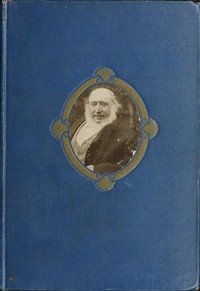
R. D. Blackmore, from a Photograph by Frederick Jenkins _On the Cover_

THE BLACKMORE COUNTRY

R. D. Blackmore was about ten years of age when his father took up his abode at Culmstock, a village in East Devon, at the foot of the Blackdowns. Notwithstanding an inclination to wander, evidence of which has been adduced in the previous section, the boy must have passed a fair amount of time at home; and wherever Blackmore tarried, he became imbued with the spirit of the place, wrested all its secrets, and acquired an intimate acquaintance with its arts and crafts such as would do credit to a committee of experts. Above all, he had the enviable gift of being able to distil from the rude realities their poetic essence--the prize of loving intelligence.

So far as Culmstock and the neighbourhood are concerned, the fruits of his observation are to be seen in _Perlycross_, and in a much lesser degree in _Tales from the Telling House_. The former, by no means so _répandu_ as _Lorna Doone_, labours under the disadvantage, which is yet not all disadvantage, of fictitious names; consequently but few are aware that Perliton, Perlycross, and Perlycombe are pretty, but deceptive aliases of Uffculme, Culmstock, and Hemyock. These little places--Uffculme, however, claims to be a town--are tapped by a light railway of serpentine construction, which branches from the main line at Tiverton Junction. The trains are appallingly slow, chiefly on account of the curves; and just outside the junction is a stiff gradient, the ascent of which, especially in frosty weather, is problematical. Often there is nothing for it but to drop back to the station and try again, or, as the French have it, _se reculer pour mieux sauter_.

The level champaign traversed by the caricature of locomotion is remarkable for its fertility, and for many other things redolent, I wot, to the ordinary resident of nothing but the meanest bathos--so deadly in use! It is otherwise with the stranger within the gates, to whom these items of every day unfold themselves as precious boons, creating a joyous sense of novelty and possession. A rapid but happy and accurate description of the vale by Mr Henry, who, I believe, is an Irishman, points the common lesson how much of beauty and wonder lies around us, had we but eyes to see. Impatient for the hills, and doubtless as purblind as my neighbours, I should scarce have lingered amid these pastoral scenes but for his restraining touch, so that I rest doubly indebted to his sage and kindly interpretation.

“I live in Uffculme. Its name might appropriately be Coleraine, for it is indeed a corner of ferns; every lane abounds with them, the hart’s tongue being specially abundant. Uffculme takes its name from the river Culm, and means simply up Culm. It is noted for ‘zider’ and its grammar school. It is a quaint and quiet village. I love its charming thatched cottages, with their niched eaves, each niche the eyebrow of a little window. The inns too are quaint, with their suspended signs, each a symbolic gem. Some in the country around here bear such names as the ‘Merry Harriers,’ the ‘Honest Heart,’ the ‘Rising Sun,’ the ‘Half Moon,’ the ‘Hare and Hounds,’ etc.

“There are four streets in Uffculme, and a triangular ‘square,’ on which a market is held every two months. In the interval the grass has its own sweet will. Everything is still; the smoke rises like incense in the air. Here, as I write, looking into a garden, which even now, in October, has many flowers in bloom, I hear no sounds but the song of the robin enjoying the glory of the morning sun, a chanticleer crowing in the distance, and the clanging anvil of the village blacksmith.

“The narrowness of the lanes around adds greatly to the country’s charms, their high hedgerows being a mass of many kinds of flowers. Thoroughly to enjoy the beauties of the neighbourhood, however, it must be viewed from one of the hills or downs. Embowered in a wealth of greenery, Uffculme sleeps on a slope of the Culm valley. As far as the eye can reach, lies a most beautiful panorama of diversified hill and dale with rounded trees, every field hedged with them. The quiet herds of Devon cattle lie ruminating and adorning the green bosom of the country. The whole scene has a charming cultured aspect, as if some giant landscape-gardener had laid it out. What peacefulness! How beautiful the cattle!

‘Aren’t they innocent things, them bas’es, And haven’t they got old innocent faces? A-strooghin’ their legs that lazy way, Or a-standin’ as if they meant to pray. They’re that sollum an’ lovin’ an’ steady an’ wise, And the butter meltin’ in their big eyes, Eh, what do you think about it, John? Is it the stuff they’re feedin’ on? The clover, and meadow grass, and rushes, And then goin’ pickin’ among the bushes, And sniffin’ the dew when its fresh and fine, The sweetest brew of God’s own wine.’

“And then the Devonshire clotted cream! It is delicious, yet simply made. The milk stands on the hob till the cream rises and attains almost the consistency of dough. Every son of Devon, native and adopted, enjoys this luxury to the full.

“The Culm is a little wandering river, abounding in trout. Otters are hunted at Hemyock. Foxes also are found in the neighbourhood, and on one occasion the noble wild red deer approached within five miles of us. Birds of all kinds are plentiful, and flowers abound. Bullfinches are a pest, even among the apple-trees. In my first walk, I saw a kingfisher and a jay. The country exudes vegetation at every pore. The mildness of the climate is evidenced by the fact that on Saturday last (October 17) I saw in bloom the foxglove, poppy, primrose, wild anthernum, and many other flowers. I ate a strawberry grown in the open; watched the bees on the mignonette beds, and saw a wood-pigeon’s nest with young. The climax is reached when I say that a man of great agricultural faith, in the neighbouring parish of Halberton, is attempting a second crop of potatoes.

“The country is well-watered; little rills gush from every quarter. The natives reckon by the flowers--_e.g._, ‘He went to Canada last hyacinth time.’ The gentlemen’s seats are lovely in the extreme, and are surrounded by trees that would not grow ‘in the cold North’s unhallowed ground.’ Within a stone’s throw of the ‘square,’ and in a former Coleraine gentleman’s seat, grow Wellingtonia pines, the cypress, the breadfruit tree, the Spanish chestnut, and other exotic beauties. A house in the village has its walls adorned with passion-flowers, now in bloom.

“We are out of the tourist’s track here. The motor rarely invades our quiet life; indeed, the roads are not suited for motoring, as the streams cross them in several places, and a foot-bridge affords the only means of dry transit for the passengers.

“I need not dwell on the Devon dialect. It is familiar to every reader of _Lorna Doone_. Suffice it to say that it slides out with the maximum ease, and in defiance of every rule of grammar. Have I exhausted Devonian joys? Nay, I could mention the melodious church-bells, the beauty of the children, and many other matters; but I have fulfilled my intention, if I have conveyed the quaintness, the peace, and the good living of this part of rural Devon--a land ‘where the plain old men have rosy faces, and the simple maidens quiet eyes.’”

Hence it appears that all the glory did not depart from Devon with fustian coats and brass buttons.

Mr Henry, it will be observed, speaks admiringly, as well he may, of the extreme loveliness of the country-seats. So far as the Culm valley is concerned, none will compare with Bradfield, the immemorial home of the Walrond family. Readers of _Perlycross_ will recollect the brave veteran, Sir Thomas Waldron, and the wrong done to his honoured remains; and they may perchance note the different modes of spelling the name. Blackmore follows the local pronunciation, and the precedent of good old John Waldron, founder of an almshouse at Tiverton, of whom Harding remarks, “By his arms I judge his ancestors were branched from the ancient family at Bradfield, near Cullompton, where they were located in Henry II.’s time.”

According to Hutchins, the family of Walrond is descended from Walran Venator, to whom William I. gave eight manors in Dorsetshire. The name is indubitably of French origin, and apparently represents the old Latin patronymic Valerian.

To turn from names to things, an authentic note attests that, in 1332, John Walrond had a licence for an oratory. Presumably this was the ancient chapel of which Lysons speaks, and which probably stood on a site still known as the Chapel Yard, on the north side of the mansion. The present house does not go back to so remote a time. On the north wall are the words, “Vivat E. Rex”; and elsewhere may be seen the dates 1592 and 1604. It is considered that the house was rebuilt in sections and at intervals, during the short reign of Edward VI., and towards the close of that of Elizabeth.

Apart from inevitable decay, the mansion remained practically unaltered until about the middle of the last century, when it was thoroughly restored by the late Sir John Walrond, who planted the fine avenues of oak and cedar. Sir John did nothing to destroy or impair the character of the place, and the changes he introduced were extremely judicious, as indeed was to be expected from a gentleman of his refined taste. Son of Mr Benjamin Bowden Dickinson, of Tiverton, who assumed his wife’s name on his marriage with the heiress of the last of the Bradfield line, he came into possession in 1845. At that time the house consisted of north and south gabled wings, united by the old hall, and in ruinous repair, roughcast and whitewashed. Low offices disfigured the west side, and the south wall was propped with timber. A farmyard and other buildings occupied the site of the present entrance.

Such was Bradfield. To-day it is one of the most charming and beautiful homes in the West. The most ancient and characteristic portion is the noble hall, which is forty-four feet long by twenty-one feet wide, and glories in a magnificent hammer-beam roof, adorned with carved angels, a rich cornice, carved pendants, and old oak plenishings. The napkin panelling is in excellent preservation, and the fine woodwork, once covered with many coats of paint, is now fully exposed. Quaint and delightful features of the apartment are the open fireplace, the minstrel gallery, and a dog-gate which kept canine favourites below stairs. Just off the minstrel gallery is the state bedroom, containing a good sketch of the hall and gallery in days of yore, which gives one to see how rich the colouring must have been. Below the gallery is the “buttery hatch,” and beyond the “buttery hatch,” the old kitchen, now the library.

The drawing-room, communicating by a doorway with the hall dais, and one of the last rooms to be restored, has, in lieu of paint and whitewash, walls of moulded oakwork, a richly panelled and decorated ceiling, and a Jacobean mantelpiece. On the screen over the doorway are coloured figures of Adam and Eve; and among other curios are an embroidered silk sachet, in which is enclosed a love letter from Mr Walrond to Anne Courtenay, written on parchment, and dated October 27, 1659, and a prayer-book belonging to the old family chapel. Many other charming sights the interior affords, such as the oak panelling of the dining-room, its old chimney-piece, its pictures. And outside is a rare plesaunce, with clipped box-trees, and great clipped yews, and a lake, and an old bowling-green. Truly, an ideal country-house!

Another branch of the Walronds lived at Dulford House, which is also in the neighbourhood. Neither of these mansions can be exactly identified with the “Walderscourt” of the romance, which is represented as standing on a spot roughly indicated by Pitt Farm, in the parish of Culmstock, and not far from the village.

There are coloured effigies of the Cavalier period in Uffculme Church, which, by the way, has a magnificent screen, sixty-seven feet in length, probably the longest in the county. Nothing authentic is known about the effigies, but many have the impression that they represent members of the Walrond family. It is possible, however, that the originals of the busts were Holways, of Leigh, since the oldest monuments in the church were erected in memory of their dead. Leigh Court is the name of the present mansion, but Goodleigh, as is shown by old deeds, was the description of the more ancient manorial residence, which did not stand on the same site. And thereby hangs a tale.

The late Mr William Wood, father of my kind friend, Mr William Taylor Wood, of Gaddon, owned and lived at Leigh, and, being of an economical turn of mind, he thought he would clear away the few mouldering ruins of the old manor house, which only cumbered the ground, and thus extend the area of one of his fields. Men were engaged for the work, and had already proceeded some way with their task, when suddenly a workman threw down his tools and vanished clean out of the neighbourhood. For years there were no tidings of him. Eventually he returned, but never vouchsafed the least explanation of his extraordinary conduct. The people of the place, by whom a new coat or pair of boots would have been scrutinised with suspicion, all decided that he had found a “pot of treasure,” whilst Mr Wood, who, with all his good qualities, was somewhat touched with superstition, commanded the operation to be stayed.

Wandering about in this pleasant and hospitable region one gathers many a charming idyll of bygone times. Such, for instance, is the story of the young lady who arrived at Gaddon on a short visit and remained fourteen years. It seems that the old housekeeper was sitting on a box before the kitchen fire, preparing lamb’s tails for a pie (by dipping them in water brought to a certain temperature, in order to facilitate the removal of the wool), when all at once she fell back--dead.

The master of the house, Mr Richard Hurley, had relations living in another part of the parish, and, on learning the sad news, sent off to them for assistance. There were a lot of girls in the family, and they and their mother were sitting cosily round the hearth, when there came a knock at the door. In those days a knock at the door was enough to throw any country household into a ferment of excitement, which, in this instance, was not diminished when the messenger announced his errand.

“Please, master wants one of the young ladies to come over, because old Betty has dropped dead.”

Upon this a family council was held, and the following morning Mary Garnsey, a pretty, rosy-cheeked maiden of fourteen, mounted her horse, and with her impedimenta slung from the saddle-bow--there were no Gladstone bags in those days--rode over to Gaddon to aid her uncle in his difficulty. Pleased with her agreeable company, and more than satisfied with her efficient services, Mr Hurley became loth to part with her, and, in fact, coaxed her to remain till she was twenty-eight, when she left to be married. Old inhabitants may, perchance, remember Mrs Pocock, of Rock House, Halberton. She was the lady.

At Culmstock one finds oneself in a village of considerable beauty, to which the little stream with its border of aspens, and the fine old church on the knoll, are the principal contributors. Hence also are avenues leading up to the witching prospects of the Blackdown Hills, Culmstock Beacon, in particular, being a favourite spot for picnics. So far so good. But there are drawbacks. When one sets foot in any of these West-country villages, one is apt to be affected with a sense of half-melancholy. Stillness is, of course, to be expected; stillness, indeed, is one of the great charms of the country, and a happy contrast to the bustle and confusion of the town. But stillness, to be entirely welcome, must not be emblematic of decay.

Not that Culmstock is altogether in that parlous state; there are many signs of enterprise and activity. Witness the erection of tidy brick houses in lieu of crumbling, thatched cottages, so sweet to look upon, but not specially comfortable to live in. That, however, is not all. One reason why cob-cottages are no longer built is that this is, to a great extent, a lost art. A friend of mine, who is not an architect, but is a pretty shrewd observer of things in general, has explained to me what he believes to have been the process. The angle of a roof is formed by “half-couples,” and in the case of cob-cottages my friend thinks that underneath the “half-couples,” at tolerably close intervals, were set upright posts. The whole of this scaffolding constituted the permanent frame of the building, and as soon as it was completed by the addition of horizontal timbers, the roof was thatched. Then the “cob,” which resembled mortar with a thickening of hair, etc., was erected in sections about two or three feet high, so as to envelop the posts, and each section was allowed to dry before the mud-wall was carried higher. This was a necessity, but, as the result, the work was slow and tedious, and nowadays would be more expensive than building with brick or stone.

Be that as it may, the fact cannot be gainsaid that at Culmstock, and not at Culmstock alone, the advent of the railway and the newspaper, and the general opening-up of communications with the outer world, have made a difference. So great indeed is the revolution that one is constrained to admit that here, though one is in Blackmore’s village, one is yet not properly in the village that Blackmore knew. True, there is the old church tower, the stone-screen (Mr Penniloe’s glorious “find”), and even the old yew-tree springing from the ledge below the battlements. The bridge, too, is much the same, save for a tasteless, if necessary, addition. The vicarage also stands, its back turned discourteously on the wayfarer; and I certify that it is the identical structure which sheltered Blackmore as a boy, though his father was never the vicar, only curate-in-charge.

All this may be granted, but the man of feeling still mourns the loss--for loss he knows there has been--of local life and colour. As Pericles observed many centuries ago, a city is not an affair of walls only; and were the material village of seventy years since more intact than it is, the change in its social conditions would be none the less. In the old days, Culmstock was no mere geographical expression; it was a distinct entity, a separate organism, fully equipped for its own needs, and harbouring, as _Perlycross_ testifies, a spirit of pride and independence. The warlike rivalry between rustic communities like Culmstock and Hemyock, though almost universal, may strike one as a trifle ridiculous; but if a “bold peasantry” could be retained at the cost of occasional horseplay, it was worth the price. What can be conceived more admirable than a strong and healthy, and in its heart of hearts, contented population, grouped into parishes, living on the land?

F. J. Snell's The Blackmore Country (first published 1906, second edition 1911) is a literary geography that maps the Devon settings of R. D. Blackmore's novels onto actual landscapes. The book's preface immediately signals its method: Snell incorporates a friendly critique from Arthur Smyth, a distant relation of the Blackmore family, to revise specific claims—for instance, the assertion that the novelist's father was poor. This willingness to adjust factual details based on personal testimony sets the tone for a work that treats both place and literary source as subjects of ongoing inquiry.

Voice and the Shifting Register of Evidence

Snell's narrative voice moves between three distinct registers: the topographical guide, the literary critic, and the local historian. In the preface, he adopts a measured, scholarly tone when discussing John Blackmore's finances, citing the fact that he “took pupils, in addition to serving his poor cure” as evidence of straitened circumstances. Yet when he turns to the Doone legend, his prose becomes more speculative and conversational. He describes the tradition as one that Blackmore “inherited,” and dismisses the notion that it was “his invention” with a tone of mild exasperation. This shift in register—from cautious documentation to confident assertion—reveals Snell's deeper investment in the authenticity of the folkloric material.

The Structure of Dispute: Weighing Competing Theories

Snell structures the discussion of the Doones as a series of competing hypotheses, each introduced with a named authority. He presents Mr. Cooper's claim that the Doones appeared “after the Revolution,” then counters it with Blackmore's earlier dating. He introduces Mr. Edwin J. Rawle's theory that “Doone” derives from “Dane,” and then offers his own philological speculation: the local pronunciation of “Dunn” as a common West Country surname. The paragraph builds like a legal argument, with Snell positioning himself as a moderator. He even includes a reference to Miss Ida Browne's Short History of the Original Doones, which he has already summarized in his earlier Book of Exmoor. This layered citation creates a sense of an ongoing scholarly conversation, with Snell as both participant and chronicler.

Pace and the Accumulation of Detail

The pace of the prose varies markedly between sections. In the preface, Snell moves quickly through revisions and acknowledgments, compressing multiple sources into a single paragraph. But when he reaches the Doone controversy, the pace slows dramatically. He devotes several paragraphs to a single question—whether Blackmore had access to a manuscript compiled by Charles Doone of Braemar in 1804. The sentence “This consists of a manuscript entitled ‘The Lineage and History of our Family, from 1561 to the Present Day’” introduces a cascade of specific evidence: the journal of Rupert Doone (1748), oral information, and family heirlooms. This accumulation of detail mimics the method of a detective assembling clues, and the reader is drawn into the slow, meticulous process of evaluation.

Snell's editorial voice is that of a guide who is also a skeptic. He does not simply describe Devon's landscapes; he interrogates the stories attached to them. Readers will benefit from paying attention to his footnotes and asides, where the most telling shifts in tone occur. The book rewards those who read it as a layered argument about how fiction and place mutually shape each other, rather than as a straightforward travelogue.

Snell’s Devon, all misted moors and old Doone grudges, lingers with me like a half-remembered lane. And yet, when I set him down, my thoughts drift to another wanderer entirely — one who walked Ceylon’s hotter, stranger paths, seeking not legends but their quiet human echo. Both books share that patient, unhurried gaze, turning landscape into a whisper. From Adam's Peak to Elephanta — Text and Context holds that same tender archaeology of place, I find.

There are no reviews for this eBook.

0
0 out of 5 (0 User reviews )

Add a Review

Your Rating *
  • ...
    Amanda Walter - 2 weeks ago
    While the subject matter is intriguing, "The Blackmore Country" fails to fully engage the modern reader. The narrative is bogged down by excessive detail and digressions that detract from the main theme. The writing style feels antiquated, and the lack of a clear structure makes it challenging to follow. A more concise and focused approach would have greatly improved this book.

  • ...
    Joshua Stephenson - 2 weeks ago
    "The Blackmore Country" offers a decent overview of the region associated with Richard Doddridge Blackmore, with rich historical context and beautiful scenery. However, the prose can occasionally feel a bit dated and the pacing slows in certain chapters. Still, it's a worthwhile read for those interested in the background of 'Lorna Doone' and the English countryside.

  • ...
    Sherry Amy Berger - 1 week ago
    "The Blackmore Country" is a captivating journey through the landscapes that inspired R.D. Blackmore's timeless classic, 'Lorna Doone.' The author's vivid descriptions of Exmoor's rolling hills, rugged coastlines, and quaint villages are so immersive that you feel as if you're walking alongside the characters. It's a must-read for any literature lover or history enthusiast seeking to deepen their connection to the beloved novel.


Reader reflection

How did this book work for you?

Your answers remain private and are stored only in this browser.

Your progress 0 / 10
1

Where are you in your reading?

2

What was your overall reaction to the book?

3

How likely are you to recommend this book?

4

How much effort did this book require?

Related eBooks