1

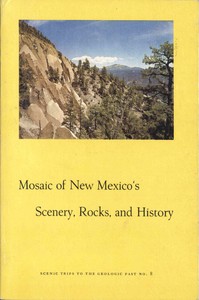
Mosaic of New Mexico's Scenery, Rocks, and History — Context and Discussion
(0 User reviews)
2562
Project Gutenberg
2017
Not confirmed
New Mexico -- History; New Mexico -- Description and travel; Geology -- New Mexico
Readers of public-domain and historical texts
Project Gutenberg digital edition
en
Edition facts
Words
67,028
Reading time
292 min
Text sections
10
Mosaic of New Mexico's Scenery, Rocks, and History — Context and Discussion can be approached with a clearer sense of reading commitment from its source measurements: 67,028 words, 4 hr 52 min estimated reading time, and 10 detected text sections.
The text analysis averages about 20.4 words per sentence, while the detected sections provide another way to judge how the source is divided.
Project Gutenberg metadata also associates the work with “New Mexico -- History,” connecting these edition facts with the source record’s subject description.
Source:
Project Gutenberg record #55800
This editorial note examines the language, narrative voice, and shifts in pace across ten scenic trips through New Mexico's geology and history, drawing on specific inscriptions, fort descriptions, and road logs.
Editorial Edition Score
4.8/5
★★★★★
★★★★★
Calculated from edition completeness, EPUB availability, text structure and catalogue metadata. Not a user rating.
How this score is calculated
- Description quality20 pts
- Title & short description10 pts
- Source metadata20 pts
- Text length15 pts
- Chapters / structure15 pts
- EPUB file integrity20 pts
Total of 100 points, scaled to a 2.5-5.0 range. Editions with an empty description or a missing EPUB file are not scored.
Edition quality
Read the complete public-domain text at its original source.
Read on Project GutenbergThe volume opens not with a preface but with a series of scenic trip numbers, each promising a route through New Mexico’s geologic past. The editors, Paige W. Christiansen and Frank E. Kottlowski, adopt a guidebook voice that is at once instructive and historical, blending road-log directions with accounts of Spanish inscriptions and military forts. The language shifts between precise geologic terminology—such as “redoubt,” “parapets,” and “bomb-proofs”—and narrative passages that recount events like the Pueblo Revolt or the Civil War invasion. This alternation creates a distinctive rhythm: the reader moves from the measured pace of a road log to the quicker tempo of historical anecdote, then back to geologic description. The excerpts show that the editors rely on primary sources, quoting directly from inscriptions at El Morro and citing the words of Don Diego de Vargas. The voice remains consistently informative, avoiding overt interpretation while letting the landscape and its recorded history speak.
Voice of the Guidebook: Between Instruction and Narrative
The narrative voice in Mosaic of New Mexico’s Scenery, Rocks, and History is that of a knowledgeable field companion. It addresses the reader directly through the road-log format, using phrases like “you will see” or “the road passes.” Yet it frequently slips into a more formal historical register when describing sites. For example, the entry on Fort Union National Monument begins with a straightforward description of location and purpose, then shifts to a chronological account of the fort’s construction, its role in the Civil War, and the arrival of Confederate forces. The language becomes more vivid with phrases such as “the great Conestoga wagons and prairie schooners” and “the ditches, parapets, and bomb-proofs of this redoubt.” This dual voice—part tour guide, part historian—creates a layered reading experience. The editors do not maintain a single tone; instead, they modulate between the impersonal efficiency of a road log and the engaged storytelling of a historical narrative. The result is a text that feels both practical and evocative, though the transitions can be abrupt.
Pacing Through Inscriptions and Military History
The pacing of the excerpts varies markedly between sections. The El Morro passage moves slowly, dwelling on the inscriptions of Oñate and de Vargas, and pausing to explain the Pueblo Revolt and the later prohibition of carving. The language here is measured, almost meditative, as the text invites the reader to consider the rock as a palimpsest of colonial ambition. In contrast, the Fort Union section accelerates. Sentences become shorter, and the narrative jumps from the fort’s founding in 1851 to the Civil War in 1861, then to the arrival of Sibley’s Texas column. The use of dates—1851, 1861, 1862—creates a rapid chronological pulse. The editors also employ lists of military roles (“mounted patrols of dragoons,” “Quartermaster Depot”) that compress information. This shift in pace mirrors the historical urgency of the events described: the slow accumulation of inscriptions versus the swift movements of armies. The reader experiences a change in tempo that is not merely stylistic but thematic, reflecting the different rhythms of exploration and conflict.
Recurring Details: The Santa Fe Trail and the Language of Movement
Throughout the excerpts, the Santa Fe Trail appears as a recurring motif, described in language that emphasizes movement and commerce. The text notes “the great Conestoga wagons and prairie schooners” and “the Independence-Santa Fe Mail,” and mentions that “century-old tracks of the Santa Fe Trail can be still seen near Fort Union.” This focus on trails, roads, and routes is central to the volume’s structure: each scenic trip is itself a path through geology and history. The editors use directional language— “twenty-six miles northeast of Las Vegas,” “on the route of the old Santa Fe Trail”—to anchor the reader in space. The repetition of such phrases creates a sense of journey, reinforcing the guidebook’s purpose. Moreover, the language of movement extends to the historical figures: Oñate “passed by,” de Vargas “conquered,” and Kearny’s troops were “dispatched.” The text consistently frames history as a series of traversals, whether by Spanish explorers, U.S. soldiers, or modern visitors. This lexical pattern gives the volume a cohesive verbal texture, even as the subject matter shifts from geology to military history.
Readers will find that the volume rewards attention to its shifts in register and tempo. The road-log sections demand a different kind of reading than the historical narratives; one might skim the former for directions and linger over the latter for detail. The editors’ decision to include direct quotations from inscriptions and official documents adds authenticity but also breaks the guidebook’s flow. For a fuller experience, consider reading the historical passages aloud to catch the cadence of nineteenth-century military reports and Spanish colonial proclamations. The mosaic metaphor of the title is apt: the book is assembled from fragments of different genres, and its interest lies in the juxtapositions.
That book about New Mexico’s scenery stayed with me, not for its facts, but for how it slows you down—each rock layer feels like a held breath. Something similar happened reading The Journal of Jacob Fowler Narrating an Adventure from Arkansas Through the Indian Territory, Oklahoma, Kansas, Colorado, and New Mexico, to the Sources of Rio Grande — Inside the Classic. Just a quiet voice, a long trail. It lingered the way those road logs did, softly.
There are no reviews for this eBook.
There are no comments for this eBook.
Reader reflection
Record your reading impressions
A brief reflection can help important ideas stay with you longer.
Your progress
0
/
10
2
Was reading this book enjoyable?
3
Would you encourage someone else to read it?
4
How much effort did this book require?
5
Which part made the strongest impression?
6
How useful were the ideas in this book?
7
How strong was your personal connection to the text?
8
What did you think about the pace?
9
Which lesson or insight stayed with you?
10