1

In the wake of the buccaneers — Themes and Context
(0 User reviews)
3513
Project Gutenberg
2021
Not confirmed
Buccaneers; West Indies -- Description and travel; Caribbean Sea
Readers of public-domain and historical texts
Project Gutenberg digital edition
en
Edition facts
Words
86,858
Reading time
378 min
Text sections
22
Before opening In the wake of the buccaneers — Themes and Context, the edition data offers a quick orientation: 86,858 words, 6 hr 18 min estimated reading time, and 22 detected text sections.
The text analysis averages about 29.4 words per sentence, while the detected sections provide another way to judge how the source is divided.
Project Gutenberg metadata also associates the work with “Buccaneers,” connecting these edition facts with the source record’s subject description.
Source:
Project Gutenberg record #64521
An examination of A. Hyatt Verrill's diction, dialogue, and descriptive choices in his 1923 travelogue blending Caribbean geography with buccaneer history, focusing on how the author's voice shapes the narrative of adventure and historical interpretation.
Read the complete public-domain text at its original source.
Read on Project GutenbergVerrill opens with a sweeping declaration that the Caribbean Sea is 'entrancing,' immediately establishing a tone of romantic admiration. His prose is marked by a deliberate contrast between the beauty of the setting and the brutality of the buccaneers, whom he calls 'villains' yet 'brave beyond compare.' This tension between condemnation and admiration recurs throughout the excerpts, shaping the reader's perception of historical figures. Verrill's descriptive style relies on vivid adjectives—'sapphire sea,' 'stately galleons'—and a rhythmic listing of ships and explorers that evokes a sense of epic continuity. The author's voice is that of a storyteller who admires his subjects' audacity while acknowledging their moral failings, a balancing act that defines the narrative's character.
Diction and the Romanticization of Violence
Verrill's word choices consistently soften the harsh realities of buccaneer violence. He describes them as 'dare-devil spirits' and 'picturesque and romantic,' even as he admits they were 'black-hearted cutthroats.' This juxtaposition is not accidental; it reflects a deliberate authorial strategy to frame the buccaneers as figures of adventure rather than mere criminals. In the account of Ogeron's shipwreck, Verrill uses phrases like 'resourceful pirates' and 'crafty old rascal' to cast the buccaneers in a sympathetic light. The murder of the fishermen is reported with clinical detachment: 'discharged a great blow on his head with the hatchet and soon bereaved him of life.' By quoting Esquemeling directly, Verrill distances himself from the brutality, allowing the historical source to speak while he maintains a tone of scholarly observation. This selective diction—emphasizing bravery and resourcefulness while downplaying bloodshed—shapes the reader's emotional response.
Dialogue as Characterization
Dialogue in the excerpts is sparse but strategically placed to reveal character. Ogeron's 'most eloquent speech' to his fellow buccaneers is mentioned but not quoted, leaving the content to the reader's imagination while emphasizing his persuasive power. In contrast, the buccaneers' loyalty is shown through their actions: they 'stoutly maintained' that their leader had drowned, a detail that Verrill uses to illustrate their 'faithfulness and loyalty to one another.' The only direct speech comes from Esquemeling's account, which Verrill incorporates as a block quotation. This choice creates a layered narrative: Verrill's own voice frames the events, while the historical source provides authenticity. The lack of extensive dialogue suggests that Verrill prioritizes action and description over character interaction, focusing instead on the collective spirit of the buccaneers rather than individual personalities.
Descriptive Techniques and Setting
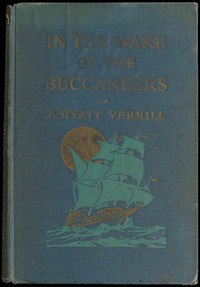
Verrill's descriptions of the Caribbean are lush and sensory, using color and motion to evoke a vivid backdrop. He refers to the 'sapphire sea' and 'lovely tropical islands,' creating a paradise that contrasts with the violent deeds of the buccaneers. This technique heightens the drama: the beautiful setting becomes a stage for brutal acts. In the shipwreck episode, Verrill describes the buccaneers 'driven ignominiously upon the rocky Guandanillas,' a phrase that combines a sense of shame with a specific geographical detail. His use of place names—Samana Bay, Tortuga, Porto Rico—grounds the narrative in real locations, lending credibility to the adventure. The author's own illustrations and photographs, mentioned in the title page, suggest a visual dimension that complements his descriptive prose, though the text itself relies on evocative language to paint scenes of escape, survival, and conflict.
Narrative Structure and Authorial Voice
Verrill structures his account as a blend of travelogue and history, moving between general observations and specific anecdotes. The introduction sets up a thesis—that buccaneers were 'a most important factor in shaping the destiny of the New World'—which the subsequent narratives illustrate. His authorial voice is confident and opinionated, as when he declares that 'we owe an immense debt of gratitude' to the buccaneers. This direct address to the reader creates a sense of shared perspective. The excerpts show a pattern of beginning with a broad statement, then narrowing to a particular event, such as Ogeron's shipwreck. Verrill often ends episodes with a moral or reflective comment, like the note that the raid ended 'with great confusion in their minds.' This structure gives the work a cohesive argumentative thread, even as it recounts disparate historical incidents. The author's presence is felt throughout, guiding interpretation and shaping the narrative's emotional arc.
Verrill's authorial choices in diction, dialogue, and description reveal a deliberate effort to romanticize the buccaneers while maintaining a veneer of historical objectivity. Readers attentive to his word selection will notice how he balances admiration with moral judgment, using vivid settings and selective quotations to craft a compelling narrative. This work rewards those who examine not just the events described, but the language used to describe them—a language that transforms cutthroats into heroes and the Caribbean into a stage for daring exploits.
Reading about Verrill's sun-bleached prose, I remembered my grandfather's wheezy laugh as he flipped through his old travelogues. That same feeling returned with In Quest of El Dorado — Background and Themes—not the gold itself, but the quiet ache of maps where nothing matches memory. Both books feel like lanterns on a dark porch, casting shadows of places I’ll never truly visit.
There are no reviews for this eBook.
There are no comments for this eBook.
Reader reflection
How will you remember this book?
Save your reaction, strongest insight, and memorable passage.
Your progress
0
/
10
2
Was reading this book enjoyable?
3
Would you pass this book on to a friend?
4
How demanding did the text feel?
5
How closely did the book connect with your experience?
6
How useful were the ideas in this book?
7
Was the book what you thought it would be?
8
How much did the book move you?
9
What is the main idea you are taking away?
10