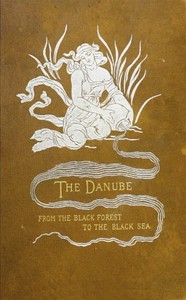
The Danube from the Black Forest to the Black Sea — Inside the Classic

(3 User reviews)   457
In Category - Geography
Millet, Francis Davis, 1846-1912, Parsons, Alfred, 1847-1920 [Illustrator] Project Gutenberg 2020 Not confirmed
Europe -- Description and travel; Canoes and canoeing; Danube River; Danube River Valley -- Description and travel Readers of public-domain and historical texts
Project Gutenberg digital edition en

Edition facts

Words 67,486
Reading time 294 min
Text sections 10

For The Danube from the Black Forest to the Black Sea — Inside the Classic, the stored edition analysis reports 67,486 words, 4 hr 54 min estimated reading time, and 10 detected text sections.

The text analysis averages about 35.7 words per sentence, while the detected sections provide another way to judge how the source is divided.

Project Gutenberg metadata also associates the work with “Europe -- Description and travel,” connecting these edition facts with the source record’s subject description.

Millet's 1892 travelogue follows a canoe journey down the Danube, blending vivid descriptions of landscapes, villages, and people with observations on local customs, architecture, and river life. The narrative moves from the Black Forest to the Black Sea, punctuated by encounters with diverse communities and the author's illustrations.
Share
Editorial Edition Score 4.8/5

Calculated from edition completeness, EPUB availability, text structure and catalogue metadata. Not a user rating.

How this score is calculated
  • Description quality20 pts
  • Title & short description10 pts
  • Source metadata20 pts
  • Text length15 pts
  • Chapters / structure15 pts
  • EPUB file integrity20 pts

Total of 100 points, scaled to a 2.5-5.0 range. Editions with an empty description or a missing EPUB file are not scored.

Edition quality

Read the Text

masses of people stimulated us almost to rashness, and, without mutual consultation, we steered straight for some snags which had caught on the angle of the weir, and jumping out into the knee-deep water, each of us shot his canoe over at the end of the painter fastened to the stern and, holding the line, scrambled down the incline where the water was shallowest, jumped into his canoe and swept away under the second bridge. All this was done in very little longer time than it takes to tell about it. When the three canoes appeared almost simultaneously in the smooth water below the second bridge, shouts of “Hip! Hip!” and “Glückliche Reise!” echoed from the hill-sides to the towers of Honberg Castle. We replied in chorus “Schneckenburger soll hoch leben!” and dramatically disappeared in the gathering darkness. A half-dozen youths, ambitious to discover where and how we were going to pass the night, followed us along the bank, and we were loath to make our first camp until we had gotten rid of them. We accordingly paddled on and on, scarcely able to see the banks, and at last found an apparently secluded spot and landed. We hauled up the canoes into the dew-drenched meadow, made our simple preparations for the night, and lay down in the snug, warm cockpits. The first night in camp is never a very restful one, and the unaccustomed and somewhat cramped berth with all sorts of sharp projecting corners and the hardest of floors, did not assist our slumbers. Nor did the visit of a bevy of peasant girls who had ventured out from a neighboring farm-house, which we had not noticed in the darkness, help us to lose consciousness as they stood for a long time in the moonlight chattering in soft voices and repeating the story of our exploit at the great weir, which had evidently been related to them by the youths whom we had successfully dodged when we landed. The heavy dew obliged us to cover up our berths in some way, and we tried the rubber blanket as the proper article for such a purpose. This was far too hot. Then we tried the deck hatches, which shut down so closely that they left no room for us to turn over and, besides, were as hot as the rubber blanket. So we passed the night between fitful naps and impatient struggles with temporary roofs. The sun had not begun to dissipate the river fog before we had taken our plunge and were ready for breakfast. By general understanding, the experienced cruiser, or Admiral of the fleet, was expected to do the cooking, and he had made elaborate preparations for this duty. The other two hungry members of the expedition watched the operation of preparing this first breakfast with eager interest, listening meanwhile to the words of wisdom which came from the _chef_ as he sat in his canoe wedged into the narrow cockpit by all the paraphernalia of his temporary trade.

“It’s no use to get out of your canoe to cook a meal,” he said, with a tone of authority that silenced our incipient suggestions as to a tidy spot on the flat surface of an adjacent rock. “It’s a thousand times simpler and easier to cook in your canoe, for your things are so handy. All you have to do is to sit just where you are and reach for whatever you want. Besides, you never lose anything, for nothing can get far out of sight in a canoe.”

All this time he was carefully arranging a towering, complex construction of tin and brass, with a large spirit-lamp beneath. It was a coffee-machine of his own invention, which, after having been charged with the various materials, was expected to make a most excellent brew at one operation. The water was to come to a boil at the same time with the milk, and then be forced in some mysterious way through the coffee, and come out _café au lait_ of a quality not to be found this side Paris. Everything went on quite satisfactorily for a few minutes, and then the spectators saw a cloud of steam and a fountain of milk suddenly rise high into the air, and, simultaneously with the explosion, saw the cook leap from the canoe all ablaze and roll wildly in the long wet grass. The canoe was covered with flaming spirits, but the fire was extinguished with little difficulty. The milk was all lost, the coffee scattered into the remotest crevices of the cockpit, the eggs were broken, the bread soaked with a nauseous mixture, and breakfast was in a mess generally. Fortunately, the damage to the person of the cook was slight, but the laceration of his feelings was far more serious and lasting, and he gave up the position of cook of the expedition which he had talked about for six weeks and had filled for six minutes, and became second dish-washer and scullery-boy.

We were eager to be afloat once more, so we picked up a scratch breakfast and launched the canoes while the ring of the scythe was still in the air, and the busy spreaders had not yet begun their work.

We shot three weirs in as many hours, and passed Neudingen, Mühlheim, and Friedingen before eleven o’clock. At the last-named village, a sweetly pastoral place among the hills, we encountered our first rapids, for the flood was so high that all the shallows in the river above had been quite covered, and we had seen white water at the weirs alone. The channel narrows at this point, the hills crowd close to the banks, and great gray crags rise from the dark foliage on the steep slopes. Ruins of castles crown almost every prominent summit, and the scenery grows wilder and more beautiful at every bend of the river. Kallenberg, Wildenstein, Wernwag, Falkenstein, and a half-score of other ruins, equally wonderful in situation, tempted us to sketch them, and we found the most delightful spots imaginable wherever we paused and exchanged the paddle for the pencil.

About eighteen miles below Tuttlingen, in the midst of the castle-crowned hills, we passed the monastery of Beuron, covering with its extensive buildings a great flat point in the river, under sheer towering limestone cliffs, surmounted by a grim black cross several hundred feet above the chapel spire.

The monastery is imposing in extent but not in style, and the railway bridge close by does not add to the charm of the landscape. The rapid current hurried us on, not against our will, and we only paused to watch the monks haymaking in the meadows, wearing a dress which looked like a compromise between the costumes of a washerwoman and a Cape Cod fisherman. They must have suffered in the hot sun, with their gowns of heavy woollen stuff, but they suffered in silence, and did not deign to answer our greetings or even to turn their eyes upon us.

We practically finished the day’s cruise at the little village of Gutenstein, where we dined in the simple country gasthaus for a ridiculously trifling sum, and listened to the droning gossip of a lounging locksmith, who was minding his little child while the mother was at work in the hayfields. With the exception of this descendant of the Jan Steen type and the landlord and his wife, we saw only small children and decrepit old people. The rest were all at work haymaking, and we left before the population returned to the village. We selected our camp-ground--with an eye to beauty of situation as well as comfort--on a high point in a perfect paradise of wild-flowers. From Alfred Parsons’s note-book for the first two days of the cruise I take the following extract, which will give an idea of the wealth of the flora of this district:

“From Donaueschingen downward the meadow flowers have a subalpine character--masses of ragged-robin and bladder-lychnis (the calyx of which is a delicate mauve), knotweed, various campanulas (one with bright mauve flowers in a very loose panicle), buttercups, purple sage, and grasses in flower. On the river banks for a long way down are masses of yellow iris, and occasionally sweet-calamus. In one meadow a purple variety of rocket; and generally the usual English meadow flowers. Lower down _Campanula glomerata_ grows in fine purple masses with the sage; and in the rocky parts about Beuron were bright pinks, like the chedder-pink, _Geranium sanguineum_, and saxifrages. A bright blue veronica grows plentifully as you go down (_Quære spicata?_). Other plants on the rocks were a purple lactuca, dog-rose, systopteris, wall-rue, and _Adiantum nigrum_.”

As long as daylight lasted we botanized and sketched; and when twilight came on we watched the glowing hill-sides fade into a simple mass in silhouette against the starlit sky, and then slept like tired children.

Our camp was pitched very near the boundary line between Baden and Hohenzollern, and a short distance above Sigmaringen, the residential town of Prince Hohenzollern. We were prepared to meet a certain degree of stateliness in the tiny capital, and our anticipations were strengthened by the sight of a well-kept park on the river-bank long before the town came in view. There were summer-houses and pleasure-boats and other indications that the place belonged to somebody of importance in the neighborhood. Further, the natural scenery was marred by the conversion of a large overhanging limestone cliff into a mortuary slab in memory of a princess who died in 1841, and whose virtues were set forth in metal letters a foot long. We expected, then, to find the town distinguished by equal pretensions and bad taste, knowing too well how much destruction can be wrought in these modern times by the engines at command of every long purse. To our surprise and delight, however, the panorama which spread out before us as we approached Sigmaringen was one of great beauty, and the town, imposingly situated on a high promontory, made an unusually fine focus in the composition. We found on near acquaintance that the architecture, though not unpleasing, was by no means particularly interesting, and we did not delay there longer than was necessary to purchase a few stores.

About forty miles by rail and road to the north of Sigmaringen is the great castle of Hohenzollern, the seat of the imperial family of Prussia. The present castle is of modern construction, having been begun by Frederick William IV. and finally completed in 1867. It is remarkably bold in situation and commanding in appearance, and, although it has seldom sheltered any of the imperial family of late years, is kept up with great care and is garrisoned by quite a large force of troops.

Sigmaringen marks the lower limit of the series of rocky gorges into which the river plunges near Friedigen, and soon after leaving the town we came into a more pastoral region again, similar to that of our first day’s cruise. The flora changed somewhat, and fewer varieties of plants were noticeable. Alfred Parsons makes the following remarks in his botanical note-book: “Below Sigmaringen the meadow flora becomes more like that of England, but still with campanulas and purple sage; also occasionally a bright crimson dianthus with clusters of flowers. In an ash wood beneath which we camped was an undergrowth of _Spiræa aruncus_, all in bloom, five or six feet in height; in the wood also were Turk’s-cap lilies, Jacobs-ladder, tall, pale-yellow phyteuma, and commonly, near the river, gelder-rose bushes and clumps of forget-me-nots and white water-buttercups. The general impression of the flora is a greater prevalence of purple and blue flowers.”

Frequent villages dot the hill-sides on either side of the broad, fertile valley, and the river begins to feel a new tyranny of man in the partial canalization of its channel. The current now increased in speed between the artificially straightened banks, and, counting the kilometre marks as we swept along, we found we were making seven and a half kilometres (nearly five miles) an hour without lifting a paddle. A more satisfactory mode of progression never fell to the lot of any traveller. Perfect summer weather, a comfortable canoe to lounge in, beautiful landscapes on all sides;

and a vigorous current under the keel which gave an exhilarating sense of added strength, much like that felt when riding a spirited horse. Nothing more could be desired except, perhaps, unlimited time in which to enjoy such pleasant recreation. Haste was, indeed, a slight drawback to our enjoyment. We did not dare delay, for the season was already in its full prime, and we knew that the gales began in the lower river as early as the first week of September; besides, one of the party had only a limited number of weeks at his disposal. Under other circumstances we would have spent a day or more at Riedlingen, where we found most interesting architecture along the river-front and saw a party of nuns at work in a hay-field. We had a little more social success with them than we did with their coreligionists, the monks at Beuron, for they turned their great, cool, flapping head-dresses in our direction, and actually seemed temporarily interested in our canoes, and in us as well.

A threatening storm drove us to seek shelter at dinnertime in a rural gasthaus in a little priest-ridden hamlet where a morose landlady gave us excellent bread and milk in rude earthen bowls, and was prevailed upon to part with some of her store of fresh bread and eggs. The peasants came hurrying into the village to escape the rain, their creaking carts piled high with hay and the sturdy little horses white with sweat. It was a ready-made picture from “Hermann and Dorothea.” We had occasion to regret in the night that we had not brought our tents, for it rained steadily for hours, and the rubber blankets rigged on the paddles made an inefficient shelter against the driving storm. But we were none the worse the next morning, and as soon as the ring of scythes of the women mowing in the next field woke us from our sound sleep we were up, cooked breakfast, and were soon off down pleasant reaches with overhanging rocks and occasional ruins frowning down from the pinnacled crags.

Every mile or two we passed a village, each more picturesque than its neighbor, and all with sonorous names that suggest places of great importance--Rechtenstein, Obermarschthal, Munderkingen, Rottenacker. Each village had its weir and its mill, and sometimes two of them. Various accidents occurred, none of them of a startling nature, and none resulting in anything worse than temporary

inconvenience. The Admiral of the fleet, trusting too much in his knowledge of river navigation, swamped his canoe in a weir, and would have been in a sad strait but for the timely assistance of some mill hands. The canoes got some heavy bumping at times while we were shooting rapids below the weirs; but there was little or no injury done to them, and the only actual loss of property was one favorite brierwood pipe--a loss which will appeal to the sympathy of every smoker who has tried the pipes of central Europe. We happened to reach Rottenacker at noon, when a great procession of rustics, armed with every imaginable kind of haymaking implements, was crossing the bridge to their labors after the mid-day meal. They halted on the bridge, looking for all the world like a detachment from Monmouth’s army, and watched us run the canoes over the weir. They gave a hoarse shout of approval of our skill, and after we had dashed down under the great wooden bridge they marched off in almost martial array, and scattered over the broad meadows like skirmishers. An hour later we reached the last weir on the river at the village of Oepfingen, and, confident from the appearance of the water that the canoes would float on it with our weight, we triumphantly paddled over the crest and shot safely into the boiling pool below. We had counted in all only twenty-one weirs and dams, although the different accounts of expeditions in the upper river give the number as twenty-five between Donaueschingen and Ulm. In all probability the unusually high water covered some of the smaller ones, and we consequently failed to make a record of them.

Below the last weir the river is monotonous and the country not particularly interesting. Turnip-topped church-spires rise above the red-tiled roofs of villages clustered on the hill-sides, and but for these features of the landscape the river might be the Thames or the Avon. Soon, however, several vigorous streams add their waters to the main current, its speed and strength rapidly increases, and its course is regulated into a straight and canal-like channel. Not realizing the speed of our progress as we floated along, we came in sight of the village of Erbach on the hills to the left of the river much earlier in the afternoon than we expected, and at the same moment saw, far beyond in the blue distance, as faintly outlined as a delicate cloud-form, the great tower of the Cathedral of Ulm breaking the low horizon line. We at once took to our paddles and increased our pace, urged on by the sight of our goal for the night and the beginning of our cruise in the navigable river. In full sight of the city, some two miles away, we passed the Iller, rushing in with a broad, pale-green flood and a strange hissing noise like the escape of gas from soda-water, and then the Danube, reinforced in strength and in volume, tore along with almost angry speed, and showed great swirls where the pale waters of the Iller wrestled with the opaque yellow of the larger stream. We saw by the white waters at the buttresses of the railway bridge as we dashed past that we had to deal with a current far more powerful than any we had yet navigated, and accordingly approached the left shore with some caution, as there was a high wall along the water’s edge and only an occasional practicable landing-place. With all our efforts to stop our head-way we found ourselves obliged to turn the bow up-stream and paddle hard to keep from being swept past the town. In this way we came alongside the float of the Donau Ruder Verein (Danube Rowing Club), and landed, welcomed by a delegation from the committee of the club, who had heard of our intended visit. They gave us a hand to carry the canoes up to the boat-house and made room for them on the padded trestles.

The club boat-house is a fair-sized building, well enough constructed for the purpose, and conveniently fitted up with quarters for the crews and stowage room for the boats, which number nearly a score, several of them from famous makers in England, but mostly of German build. Notwithstanding the disadvantages of rowing in so rapid a current, and the difficulties of launching and landing the boats, the members practise with great enthusiasm, and the club has a remarkably good record in the boating annals of Germany. The committee placed all the resources of the institution at our command, and not only gave us every assistance in repairing the slight damages which our canoes had suffered in the rough treatment they had received at the weirs, but made other generous offers of hospitality. The president, who is a mechanical genius of considerable fame as well as an enthusiastic sportsman and a traveller, was devoted to our interests, and made every moment of our stay agreeable. Before we departed our ex-cook presented the club with his famous coffee machine as a slight acknowledgment of their kindness to us. We have never learned how much the ranks of the Donau Ruder Verein have been decimated by the use of this dangerous invention.

F. D. Millet's account of a canoe voyage down the Danube is structured as a series of discrete episodes, each anchored by a specific location or event. The narrative moves from the river's source in the Black Forest to the Black Sea, but the journey is less a continuous flow than a sequence of set pieces: a first weir and luncheon, a monastery visit, a narrow escape from lumber rafts, a Fourth of July celebration at Passau. This episodic structure allows Millet to shift between modes—descriptive, anecdotal, ethnographic—without forcing a unifying arc.

The text is punctuated by recurring images: the river itself, described as turbid or muddy; the tree-covered banks that offer both monotony and respite; and the constant presence of boats, rafts, and ferries. Movement between scenes is often abrupt, as when the author notes that a 'parachute had burst' and they 'came to earth with a heavy thump' after a German interlude. These transitions underscore the journey's physical and perceptual shifts.

Episodic Structure and the Role of Place

The book's chapters are organized by geographic waypoints—Donaueschingen, Ulm, Ratisbon, Vienna, Budapest—but within each chapter, Millet groups observations around specific encounters. A typical section might describe a town's architecture, then a local custom, then a river incident. For instance, Chapter IV moves from Lauingen's architecture to a narrow escape from lumber rafts to Roman remains and the Niebelungenlied. This structure gives the narrative a mosaic quality, where each place yields a distinct vignette.

Millet often signals transitions with phrases like 'our Sunday's excursion also included' or 'when we left the mouth of the canal.' These markers create a sense of purposeful movement, even when the content is digressive. The effect is that of a travel diary where each day brings a new scene, but the overall journey remains the organizing principle.

Recurring Images: Water, Banks, and Boats

Throughout the excerpts, certain images recur with notable frequency. The river is consistently described in terms of its color and movement: 'turbid stream,' 'muddy flood,' 'vigorous current.' The banks are 'tree-covered' or 'fertile hills,' and the author often notes the 'soothing regularity' of the landscape. Boats and rafts appear repeatedly—lumber rafts, a local freight flat-boat, the author's own canoes—and serve as both transport and objects of observation.

Millet also pays close attention to the river's edges: 'perpendicular bluffs' of earth 'almost as hard as sandstone,' 'rude steps cut along a cleft' where girls carry water jars. These details anchor the narrative in a physical world that is both picturesque and functional. The river is not just a route but a constant presence, shaping the journey's pace and the author's attention.

Movement Between Scenes: Contrast and Transition

Millet often juxtaposes scenes to highlight cultural or visual contrasts. In one passage, he moves from a church service in a Schokacz village to a Magyar village, noting the 'totally different type and dress' of the people. The shift is abrupt: 'we hurried away' and 'arrived only in time.' Later, a visit to a gypsy settlement 'disagreeably contrasted' with the 'perfection of neatness' of the Schokaczs and Magyars.

These transitions are not always smooth. After describing a German settlement at Apatin, Millet writes, 'Our parachute had burst, and we came to earth with a heavy thump.' The metaphor suggests a sudden drop from the exotic to the familiar. Such moments reveal the author's awareness of his own expectations and the way travel disrupts them. The narrative's rhythm—alternating between engagement and detachment—mirrors the physical and emotional shifts of the journey.

The Role of the Observer: Millet's Perspective

Millet positions himself as a participant-observer, often noting the limitations of his viewpoint. He describes scenes with a painter's eye for detail—'the women strode off homeward with an energy of action that made their stiff petticoats balloon out'—but also acknowledges what he cannot capture. Of a gypsy settlement, he writes that it 'gave us a notion of the range of types easily studied in this one neighborhood,' implying a superficial understanding.

The author's background as an illustrator (and the book's illustrations by Alfred Parsons) informs his descriptive style. He frequently notes visual details: costumes, architecture, the 'flickering shadow of the trees.' Yet he also admits to moments of boredom, as when the 'soothing regularity' of the banks offers a 'little respite' from constant sketching. This self-awareness prevents the narrative from becoming purely picturesque and adds a layer of reflection on the act of travel writing itself.

Readers approaching Millet's account should attend to the way he builds scenes from discrete observations rather than a continuous story. The book rewards those who enjoy detailed descriptions of place and custom, but it also invites reflection on how travel narratives shape our sense of a region. The episodic structure means one can dip into any chapter and find a self-contained portrait, but the cumulative effect is a mosaic of the Danube's human and natural geography.

In Millet’s Danube, I often lingered on his quiet sketches of river-worn stones and leaning willows—those tiny engravings that carried a whole landscape’s hush. That same patient hand seems to rest upon Forest, Rock, and Stream A series of twenty steel line-engravings — Themes and Context, where every line feels like a breath held. Years later, I still recall both with equal tenderness.

Ella Lopez
1 month ago

Scarlett Hernandez
3 weeks ago

Alexander Davis
1 month ago

4
4 out of 5 (3 User reviews )

Add a Review

Your Rating *
There are no comments for this eBook.

Reader reflection

How will you remember this book?

Save your reaction, strongest insight, and memorable passage.

Your progress 0 / 10
1

Which reading stage best describes you?

2

Was reading this book enjoyable?

3

Would you recommend this book to another reader?

4

How easy was the book to follow?

Related eBooks