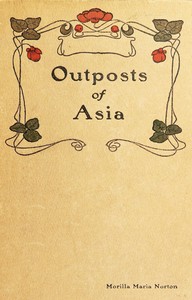
Outposts of Asia — Edition Insights

(1 User reviews)   289
In Category - Geography
Norton, Morilla Maria, 1865- Project Gutenberg 2022 Not confirmed
Japan -- Description and travel; Philippines -- Description and travel; Korea -- Description and travel; Manchuria (China) -- Description and travel Readers of public-domain and historical texts
Project Gutenberg digital edition en

Edition facts

Words 25,950
Reading time 113 min
Text sections 22

The catalog record for Outposts of Asia — Edition Insights provides practical reading context through 25,950 words, 1 hr 53 min estimated reading time, and 22 detected text sections.

The text analysis averages about 26.0 words per sentence, while the detected sections provide another way to judge how the source is divided.

Project Gutenberg metadata also associates the work with “Japan -- Description and travel,” connecting these edition facts with the source record’s subject description.

Morilla Maria Norton's 1909 travelogue through Manchuria, Korea, and Japan blends personal observation with cultural commentary, focusing on Japanese education, the figure of Ieyasu, and the concept of 'world men' like Kaneko, offering a nuanced portrait of early 20th-century East Asia.
Share
Editorial Edition Score 4.8/5

Calculated from edition completeness, EPUB availability, text structure and catalogue metadata. Not a user rating.

How this score is calculated
  • Description quality20 pts
  • Title & short description10 pts
  • Source metadata20 pts
  • Text length15 pts
  • Chapters / structure15 pts
  • EPUB file integrity20 pts

Total of 100 points, scaled to a 2.5-5.0 range. Editions with an empty description or a missing EPUB file are not scored.

Edition quality

Read the Text

s what appealed to her most strongly and this has been the first note in her educational scheme.

We had sought for the motto which gives the keynote to the social life of a Japanese home, and in the house of Viscount Kaneko we had found it to be: “Wealth and rank are but a fleeting show, the merit is the man.” Here it was, as we might have known: “Duty First.”

What would one expect of a woman who had spent her middle life in educating the upper classes of her people, that she would want to rest? Oh, no! for the remaining years she is to devote herself just as earnestly to the educating of middle and lower class Japanese women.

This frail but purposeful woman had fire in her eyes as she spoke of the future, a future which to such as she must only mean vaster and vaster horizons and more radiant conquests.

If you walk from Hibiya Park between two imposing public buildings, up the broad avenue to the top of the hill, you will come to the high wall which encloses the Peeress’ School, with the court, a fine entrance space, with porter’s lodge and a porte cochere of Gothic arches, and the whole a good bit of English architecture, with wide door and a lofty hall. Opposite you as you enter is the refectory, with its low tables and the plain and substantial effect of age and use. Two pretty portresses will meet you at the door, with their eyes full of fun, as all boarding-school maids have, as they are the secret ambassadors of much mischief and are initiates of that occult society of fun. Their demure manners, assumed for the occasion, do not blind you to their roguery, for you have been a boarding-school girl long ago.

The instructor in English is as courteous as a guide as he is clever in the use of your mother tongue, and you begin with a keen relish the tour of inspection.

The reception room is rather like the meeting room of a committee, for which purpose it is doubtless often used. Here the wise heads are doubtless laid together and those plans for the education of Japan’s future wives and mothers laid. Out of this room leads the Empress’ reception room, with the heavy damask curtains, the high ceilings and the empty walls where, on the two yearly visits, the gracious and “first woman of the land” receives the homage of the director and his staff and gives in return the interest of all true women, be they high or low, in the education and welfare of their sex.

The school has three terms,--one week’s vacation in April, and more than two months in summer, and a short vacation at the New Year. About the end of October is the exhibition in physical exercises, and about the end of March that awe-inspiring epoch of graduation, when the high functionaries of State and the distinguished clientele of Tokyo come to see their girls step out of the schoolroom into the school of life--a moment mingled in every land and school with gaiety and pathos.

The children enter the kindergarten at the end of the toddling age, and the little lads and lassies sit side by side in their delightful rooms and make their first songs of life, as they end them, together, their little arms and hands making the first efforts at rhythm together, awkward movements full of grace. They pass at eight years to the primary department and begin the toilsome upward pull of real study, and here their ways part,--the boys for the Peers’ School and the ruder ways of masculine effort. From the primary course they enter at about the age of fourteen the “middle course,” and that is in grade substantially our High School. From this they can take post-graduate courses in special studies, such as the classics, music and other branches. The branches are technical departments, music, needlework and embroidery, and a thorough course in cooking. Of the painting we will speak later.

The Literary department must include courses in advanced Japanese classics and English and French literature. The Science department comprises a small laboratory, not overstocked with apparatus, and a good class-room for experiments. This department has few devotees, as might be expected, and also mathematics, and there is “little Latin and less Greek” in the regular curriculum.

These sparkling-eyed young damsels take mostly to the gentler arts and the gentler paths of learning. Our first visit was to the painting department, as was fitting in a land which is above all things an amateur of art. Here some ten young girls were painting on silk the flowers and butterflies so dear to the Japanese heart. They were fifth-year students and were very clever. The first year’s work hung about on the walls. We looked for still-life subjects and casts, and were told we would find them later, as we did, and some good work in oil, and were told that animals and more ambitious subjects were attempted by these embryo Rosa Bonheurs. The work was about on a level technically, without being as original, as similar work of the same age at home.

The gong struck for the end of a forty-five minutes’ period as we left these rooms and the girls rushed out to the playground with all the excitement of such times at home. The playground is much too small. It had a tennis court where the girls were striking wildly at a tethered ball, an amusement they seemed much to enjoy. There is a fine gymnasium with the omnipresent piano, and here the marching and physical exercises are practised. The kindergarten department playground has piles of sand for the little folks, and they begin their engineering and their landscape gardening in the bright sunshine there. In the halls we saw two ping-pong tables, and certainly the physical side of the young ladies’ training is not neglected. The auditorium is spacious, and here are held the overflow recitations occasionally. We saw a class in ethics file in, their faces alive with youth and happiness, a charming ethical picture! As we were passing one door a group of these eager beings emerged, and our guide informed us that the tall young lady was Admiral Togo’s daughter.

Four hours a week are given to foreign languages, and French or English may be selected. German is not taught to the girls. We were particularly entertained in the history class. The young ladies were as intent as their master, who told them in impassioned language of that impassioned epoch of the French revolution. “Danton and Robespierre,” how strange those names sounded so far away, mingled with the hurrying voice of the speaker! The revenge of the years on evil, how far-reaching! In the English class we heard some very creditable rendering of English verse by the girls, and the charm of Tennyson’s “Idylls of the King” lost nothing on those pretty lips. The Knight Sir Lancelot and the maid Elaine and all their chivalric woes and their exquisite love story was dainty enough in its new setting. We saw the cooking class at work and the little maids frying fish and preparing the lunch that was to be served at the long table in the airy dining-room which opens into the garden. For myself I was willing to try the cooking, however indigestible, after seeing the cooks. The teacher was an old Japanese gentleman who was as cool, apparently, with these too many “cooks spoiling the broth” as a young chef would not be, patience being the supreme qualification for a cook, as for a Cabinet Minister.

We found the kindergarten department, after all, the most alluring, for the rooms here were more attractive and the little pupils passingly dear. They sang so sweetly and played so charmingly in the wee garden and came running about us with all the abandonment of childhood and the laughter of fairies that we were captives to education at once.

If we could have one of those baby companions as a seat mate we would be willing to go over the whole course again, beset with the terrors of examinations and failure marks as it was.

The teachers of the Peeress’ School are specialists and have received the training of many lands. We had a cosy chat in the director’s study, and he amusingly informed us in very idiomatic English as a beginning “that as he had arrived only a day before us he did not know much more than we about the school.” This admission was certainly promising of great good to the school, as wisdom is not hasty in its judgments, nor rash in its methods.

Looking into that face which bears the beauty of refinement and culture to an eminent degree, as well as that soul light, without which all education is vain and all teachers worse than vain, we felt that in the hands of a man associated for more than twenty years with the education of the youth of Japan, Mr. Gentaro Matsumoto, the future of the Peeress’ School might be even brighter than its past.

The subject of this chapter is one of the forces,--which unobtrusively and unostentatiously is not only felt in Japan, but in the world. He is a world man. In order to pass into this category of world men, a great deal is required, and process is always of intense interest to humanity,--which from the lowest to the highest is aspiring to be felt.

Chosen to represent in the Great Exposition the country of which his proudest boast is to be a son, he combines those distinguished attainments, which a long past of services well rendered have given in turn, and is not only a fine example of Modern Japan at its present moment of leadership, but is also a man of the world,--moulded by the best scholarship of the last century, and while working to-day in the formation and perfecting of his own government, his thought has the catholicity of a statesman and embraces the interests of every land as well.

Born at an epoch when his country was just awakening to the modern struggle,--born out of the provincial life, which is always the best preparation for city life, because it is more serious, more profound, and more far-reaching in its thought than that of a metropolis, as it is more introspective; he came as a very young man to be the adopted foster son of our great republic, and with singular Oriental astuteness, read into its pages of history and life, its secrets of growth and progress, as well as its defects and limitations; he rose through all the grades of a city public school, that unrivaled training for life, entered our proudest university, the synonym of culture, of the humanities of that aristocracy of thought which separates and differentiates men, far more than lineage,--and came out of it to mingle in the affairs of men, a democrat, progressive, man of action, incorporating in his ideals and work the best influences of the past, but an ardent lover of the future, a believer in better days and things, a belief which he has kept to this hour.

Kentaro Kaneko was born in Fukuoka, Chikuzen, Western Japan,--noted for its chivalry, its warriors, and also for its learning. Its Daimyo was Marquis Kurada, one of the greatest nobles of the land, the grandfather of the present Vice-President of the House, and this man took a special interest in Viscount Kaneko, and it was through his influence that as a boy he was sent to Tokyo to study, and later to Boston, where he began his education in the Boston public schools. From these schools be entered Harvard Law School and graduated, returning to his own country after eight years, and was soon appointed by Prince Ito Secretary of the State Council, and was in the next year appointed private secretary to Prime Minister Ito, and launched on the arduous labors of making the draft of Japan’s future Constitution.

He was married to the present Viscountess, the daughter of a governor of one of the Japanese provinces, and they have two daughters and a son. Viscountess Kaneko is exceptional in her graceful hospitality, a lover of home, and although she does not speak foreign languages, is said to be a brilliant conversationalist in her own, and is a real helpmate to her husband in his intellectual and social life, devoted to children and to entertaining, she has won enthusiastic appreciation from her guests by her tact and kindness. She is interested in all the best modernism.

In a recent resume of his life, we gather these details:

“In 1890 he was elected as a member of the Institute of International Law and in 1892 attended its general meeting held in Switzerland. At the meetings, he advocated reforming the Treaties then in force between Japan and foreign powers and for abolishing extraterritoriality in Japan, and after much argument and pleading, he at last succeeded in getting the Institute to pass the resolution. In 1894 he was appointed the Vice Minister of Agriculture and Commerce; in 1898 became the Minister of Agriculture and Commerce in the Ito Ministry, and then resigned the portfolio together with Prime Minister Ito. In 1899 he went over to the United States, accepting an invitation from Harvard University, where the honorary title of Doctor of Laws was conferred on him. He was the first Japanese that received the title, and the reason for conferring this singular honor upon him was announced by President Eliot at the Commencement as follows:

“Kentaro Kaneko, Harvard Bachelor of Laws, formerly Chief Secretary of the Imperial House of Peers in Japan, and Vice-Minister and Minister of Agriculture and Commerce, Life member of this House of Peers, the type of those scholars of two Hemispheres through whom West would welcome East to share in the inheritance of Hebrew religion, Greek Art, Roman Law and Nineteenth Century Science.”

In 1900, he was created a Baron in recognition of his service. Before this time, he had organized with Prince Ito a political association named Seiyu-Kwai and was appointed a member of the managing committee. When the Ito Cabinet was formed in 1900 he was appointed to the portfolio of the Minister of Justice. The next year, when the Ito Ministry resigned, he retired to a quiet life for a while. In 1904 on the declaration of war with Russia, the Viscount was ordered to proceed to the United States on a special mission and remained there for one year and a half. During that time he devoted himself to promote the best interests of his country and scarcely had a day’s rest, so that he was looked upon as uncommissioned ambassador; and it is said when the negotiation for peace was commenced at Portsmouth, he labored hard to secure a successful result, and had several interviews with President Roosevelt. In 1906 he was appointed a Privy Councillor and for his service during the war, decorated with the First Order of Merit and the Grand Cordon of the Rising Sun. In 1907, when the Order for the Organization of the Bureau of the Grand Exhibition of Japan, to be opened in 1912, was promulgated, he received the Imperial Order to be the Director of the Exhibition with all the offices and rank already conferred upon that function. In September, 1907, he was a Viscount for his service rendered for the cause of his country.

In one of our interviews with this man, whose souvenirs cover such an interesting period, we asked him for reminiscences, which he kindly gave in the genial and unstudied manner characteristic of his conversation.

“My souvenirs of England? Every day I used to go and sit in the house and listen to the debates in which Gladstone and his illustrious colleagues took part, this was in 1890, and I learned the usages from Sir Reginald Palgrave, who was the clerk of the house, the brother of the famous Prof. Palgrave of Oxford. My friendship with Herbert Spencer was a connecting link from America, for I took a letter from Mr. John Fish to him, and sending him my card, we met the following day by his invitation. At once we talked on the constitutional government of Japan and I showed him the English translation of the Constitution and we discussed questions of morality and religion. He was particularly interested in Japanese history, and evidently my explanation cleared many points he could not get right before. His face glowed with excitement. He jumped up, having an engagement at half past four, and he took me in his carriage and drove me to my hotel on his way to the “Atheneum Club.” We talked all the way and he said ‘I shall propose you as an honorary member of the Atheneum Club,’ and I was informed a week later that I was elected a member. Frequently afterward we dined there together, and on my return to Japan we corresponded. Herbert Spencer had great interest in the Orient and in collecting from there his materials for his social studies. Another friend was Lord Coolidge, Chief Justice of England. He used to entertain a great deal in his London house and there I met the celebrities. Sir Francis and Lady Jeune entertained me during the London season, and I visited with them in their country place in Newberry, meeting all the society of the day, Lord Knutsford and others. Gladstone impressed me as one of the greatest men in intellectuality, learning and the force of conviction; at that time he was out of office.

“In 1892 I revisited London, and arrived the very day Lord Salisbury went out and Gladstone’s cabinet came in. Among its members Mr. James Brace was my particular friend. I met him often in London and in the United States in 1904, when he was invited to give lectures to the Alumni at Harvard.

“When in England I met many Oxford and Cambridge men. What impressed me as admirable in England was the English quiet, contented life. In Japan politically we are aristocratic, but in all the social relations we are democratic. The wife educates our servants to be really interested in their duties. We, the Japanese, are not very rich, we do not count the men by their money, but by their worth; any man is admitted to the best society who is worthy of it. Japan is the most deceptive country externally; you scarcely meet a single lady, or gentleman in the street, so you do not meet them on the cars or the parks. A Japanese lady sends for her goods to the house, a promiscuous crowd alone meets you so that you rarely come in contact with the well-bred people of the country. So it is also the undesirable people who go to America, oftentimes either in misfortune financially through the fault of others, he is preparing himself by an industrious life in a foreign country, and often he is trying to retrieve his life or that of his family. Hotel boys and servants come back and take useful places here, the better for their experience.

“Among the great men who moulded my ideals in America, I wanted to study the religious institutions and influence in the United States, so I went to all the churches while in Boston, Roman Catholic, Congregational, Swedenborgian, Episcopalian, Baptist, and Parker’s Memorial, and met all classes of preachers, theologians, and ethical teachers. I was in public school in Boston in 1872, when the public school was at its best. That gave me the strong force to come back into the battle of life, and from the mingling with negroes and emigrants, I learned life. I knew Longfellow and Holmes and spent two summers with him at Beverly Farm. Robert C. Winthrop was also my friend, and was also a great help to me. Through his kindness, Judge Holmes gave me more material to cultivate my mind perhaps than any other American. President Eliot was of course an inspiration and two of my pleasantest memories are visits to James G. Blaine at Bar Harbor and President Cleveland at “Gray Gables”.”

Morilla Maria Norton opens Outposts of Asia with a dedication poem to "M. B. N." that juxtaposes snow and fire, death and vitality—a tonal contrast that recurs throughout the travelogue. The foreword frames the journey as a tribute to the Imperial Railway's hospitality and a pledge to the Manila Merchants Association, signaling the book's dual purpose: personal travel narrative and commercial promotion. Norton's description of a kakemono depicting Ieyasu—"the grim old fighter" holding both a sword and a roll of paper—establishes her method of using artifacts to encapsulate national character. She reads Ieyasu as emblematic of Japan: "imbued with the large serenity which grasps ages, not minutes." This interpretive leap, from object to people, sets the pattern for subsequent chapters.

A Poet's Eye for Detail

Norton, also a poet, brings a lyric sensibility to her observations. In the Peeress' School, she notes the girls reciting Tennyson's "Idylls of the King"—"the Knight Sir Lancelot and the maid Elaine"—and finds the "chivalric woes" fitting their "pretty lips." She describes the cooking class with wry humor: "the teacher was an old Japanese gentleman who was as cool... with these too many 'cooks spoiling the broth' as a young chef would not be." The kindergarten captivates her completely: "they sang so sweetly and played so charmingly... with all the abandonment of childhood and the laughter of fairies." These vignettes reveal Norton's preference for the charming over the monumental, and her willingness to be charmed.

The Making of a 'World Man'

In the chapter on Kaneko, Norton introduces a category she calls "world men"—figures who combine Eastern heritage with Western education. She traces Kaneko's path from provincial birth to adoption by the United States, through "a city public school" and "our proudest university," emerging "a democrat, progressive, man of action." Her language echoes the foreword's portrait of Ieyasu: both men are scholars who learn from experience. Norton's admiration is evident, but she grounds it in specific biographical details—Kaneko's role at the Great Exposition, his long government service—rather than vague praise. The chapter functions as a case study in her broader argument about Japan's modernization.

Structure and Purpose

The book's organization reflects its origins: a journey "on the track of the fighting line" through Manchuria, Korea, and Japan, with a final chapter on Manila added for the Merchants Association. Norton moves from place to place, but her attention lingers on institutions (schools, railways) and individuals (Kaneko, educators) rather than landscapes. The foreword's mention of the Imperial Railway's kindness hints at sponsored travel, which may explain the consistently positive tone. Readers should note that the excerpts provide only fragments—the full text likely contains more varied encounters. The author's voice, however, remains consistent: observant, literary, and gently didactic.

Reading Between the Lines

Norton's perspective is that of an outsider—an American or British expatriate in the Philippines—writing for an audience familiar with Western classics. Her references to Tennyson, Charlemagne, and "our great republic" assume shared cultural touchstones. Yet she also offers specific, grounded details: the director of the Peeress' School, Mr. Gentaro Matsumoto, had "more than twenty years" of experience; the cooking teacher's patience was "the supreme qualification for a cook, as for a Cabinet Minister." These small observations give the text texture. Readers should watch for similar moments where Norton's poet's eye catches the concrete amid the general.

Outposts of Asia rewards a reader attentive to its author's dual identity as poet and traveler. Norton's prose moves between lyrical description and analytical commentary, often within the same paragraph. The excerpts suggest a work that is more interested in cultural character than in chronological travelogue. For a first reading, focus on how Norton uses specific encounters—a school visit, a portrait, a conversation—to build her portrait of early twentieth-century Japan and its neighbors. The book's brevity (under 26,000 words) makes it a compact entry into a complex region.

The rain pressed against the window while I drifted through Norton’s sharp-edged impressions of Japan, pausing longest on her portrait of Ieyasu, that patient architect of stillness. Odd how soon afterwards I lingered over a very different journey, the quiet lanes of Wales. Both felt like maps of unseen roads. I remembered that old volume, The Holyhead Road: The Mail-coach Road to Dublin. Vol. 1 — A Reader’s Guide, and its own slow travel through remembered distances.

Benjamin Lee
4 weeks ago

5
5 out of 5 (1 User reviews )

Add a Review

Your Rating *
  • ...
    Kimberly Hill - 1 month ago
    A captivating journey through the lesser-known frontiers of Asia. The author's vivid prose brings to life the cultures, landscapes, and political complexities of countries often overlooked. It's both informative and deeply engaging, offering a unique perspective on the region. Perfect for armchair travelers and geopolitics enthusiasts alike. Highly recommended.

  • ...
    Ryan Miller - 2 weeks ago
    This book provides an interesting overview of Asia's 'outposts' with rich historical context. The writing is descriptive and often immersive. However, it occasionally feels outdated in its political analysis, and some chapters are more detailed than others. Still, a solid read for those wanting a general understanding.

  • ...
    Charles Johnston - 2 weeks ago
    Despite its potential, this book comes across as a superficial travelogue rather than a serious study. The author's colonial-era mindset is jarring, and the narrative lacks critical depth in addressing local realities. Many claims are unsubstantiated, making it an unreliable source. There are far better contemporary books on Asian geopolitics.


Reader reflection

Your personal reading reflection

Build a private reading journal entry for this title.

Your progress 0 / 10
1

Which reading stage best describes you?

2

Did this book hold your interest?

3

Is this a title you would suggest to others?

4

Did the language feel accessible?

Related eBooks