
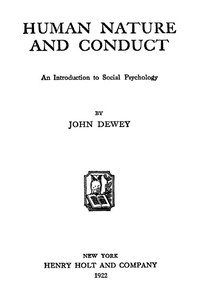
Human Nature and Conduct: An introduction to social psychology by John Dewey
Let's be clear: this isn't a story about a hero's quest or a detective solving a murder. The "plot" of Human Nature and Conduct is the drama of human behavior itself. John Dewey, a giant of American philosophy, takes apart the idea that we're driven by fixed instincts or a rigid "human nature." Instead, he paints a picture of us as constantly evolving beings. The core of the book explores three forces: our raw impulses (like curiosity or anger), the habits we form from them (both good and bad), and how our social environment encourages or discourages those habits. The "conflict" is the daily struggle within this cycle. Dewey argues that morality isn't about following abstract rules, but about intelligently directing our impulses into habits that work for us and our community.
Why You Should Read It
I picked this up expecting a dry lecture, but found a book that spoke directly to my own life. Dewey's ideas make so much sense. When I feel stuck in a bad habit, it's comforting to think of it not as a personal failing, but as a pattern that was learned and can be unlearned. His view is incredibly empowering. It moves the question from "What is wrong with me?" to "What in my environment or routines is feeding this habit, and how can I change it?" This book changed how I think about politics, too. Dewey connects personal conduct to social problems, suggesting that to fix big issues, we need to look at the everyday habits and structures that create them. It's philosophy that feels practical.
Final Verdict
This book is perfect for curious thinkers who are tired of simple explanations for human behavior. It's for anyone interested in self-improvement, psychology, education, or social change, but who wants ideas without the jargon. While it's over a century old, its insights into habit formation and social influence feel incredibly modern—you'll see echoes of Dewey in today's discussions about mindfulness, behavioral science, and systemic change. If you enjoy authors like James Clear (Atomic Habits) or Charles Duhigg (The Power of Habit), reading Dewey is like visiting the source. Be prepared to read slowly and think; it's not a beach novel. But if you give it your attention, it might just change how you see yourself and the world around you.
You are viewing a work that belongs to the global public domain. Enjoy reading and sharing without restrictions.
Emma Harris
10 months agoBased on the summary, I decided to read it and it provides a comprehensive overview perfect for everyone. Worth every second.
Barbara Torres
10 months agoBeautifully written.
Oliver Rodriguez
1 year agoFinally a version with clear text and no errors.
Robert King
1 year agoHelped me clear up some confusion on the topic.









Aiden Sanchez
1 year agoGood quality content.