
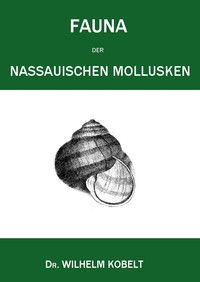
Fauna der Nassauischen Mollusken by Wilhelm Kobelt
Let's be clear from the start: this is not a novel. Wilhelm Kobelt's 'Fauna der Nassauischen Mollusken' is a scientific catalog, published in 1876. It's a systematic list and description of the land and freshwater mollusks (think snails, slugs, and mussels) found in the Duchy of Nassau. The book is structured like a field guide for experts, moving through different families and species. For each entry, Kobelt provides its scientific name, a detailed physical description (shell shape, size, color, texture), notes on its habitat within the region, and sometimes observations on its behavior or how common it is.
The Story
There's no character arc or plot twist. The 'story' is the journey of discovery itself. Kobelt, a dedicated malacologist (mollusk scientist), essentially spent years being a detective in the natural world. His mission was to create a complete record. He documented everything from common garden snails to rare, tiny species hidden in moss. The narrative is in the accumulation of detail—the sheer number of life forms thriving unnoticed. It paints a picture of a specific place and time through the lens of its smallest, slowest inhabitants.
Why You Should Read It
You should dip into this book for its atmosphere and its astonishing focus. Reading it feels like looking over the shoulder of a 19th-century naturalist at work. There's a peaceful, meticulous passion in every line. It’s a reminder of how much wonder existed in local, close-up study before global travel and digital databases. While the Latin names and anatomical terms can be dense, skimming through reveals surprising moments. You get a sense of the personality of these creatures through Kobelt's eyes: which ones are 'delicate,' which are 'widespread,' which prefer damp ravines. It turns a simple list into a portrait of an ecosystem.
Final Verdict
This book is a niche treasure. It's perfect for history of science fans, naturalists, or anyone who loves primary source material. If you enjoy old field guides, botanical illustrations, or the idea of 'slow scholarship,' you'll find it captivating. It's not for someone looking for a paced narrative. But if you want to temporarily inhabit the mind of a devoted scientist from 150 years ago and see a patch of German countryside through his uniquely specialized lens, this is a quiet, remarkable trip. Think of it as literary time travel for the naturally curious.
This masterpiece is free from copyright limitations. It serves as a testament to our shared literary heritage.
Ava Martin
7 months agoI came across this while browsing and the emotional weight of the story is balanced perfectly. I learned so much from this.
Ava Martin
6 months agoI had low expectations initially, however the atmosphere created is totally immersive. I learned so much from this.
Liam Wilson
4 months agoA bit long but worth it.
Aiden Hill
5 months agoFrom the very first page, the pacing is just right, keeping you engaged. Exceeded all my expectations.





Brian Young
11 months agoAs someone who reads a lot, the emotional weight of the story is balanced perfectly. Worth every second.