
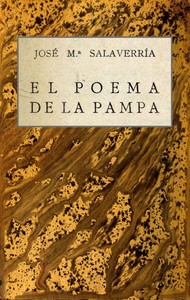
El poema de la Pampa: "Martín Fierro" y el criollismo español by Salaverría
This isn't a book about the plot of 'Martín Fierro' itself. Instead, it's about the poem's surprising second life. José María Salaverría, writing in the early 20th century, examines how this foundational Argentine work about a gaucho's struggles with injustice and a changing world was adopted and championed by a group of Spanish intellectuals known as the 'criollistas.'
The Story
The 'story' here is one of cultural exchange. Salaverría maps out how these Spanish writers, feeling disconnected from modern European trends, looked to the Americas. In Martín Fierro, they found what they believed was a pure, heroic, and authentically 'Spanish' spirit preserved in the Argentine cowboy. They saw the gaucho not just as a regional figure, but as a direct descendant of the conquistador, a symbol of timeless Spanish values like individualism, honor, and a connection to the land. The book traces this idea, showing how the criollistas used Fierro to fuel their own arguments about what Spain was and should be.
Why You Should Read It
What grabbed me was how current it feels. This is about how we use stories to build identity. Salaverría doesn't just report on this phenomenon; he's part of the conversation. You get a sense of the passion and the politics behind literary criticism. It shows that a book or poem is never just its words—it's also about who reads it and why. Seeing a classic through someone else's lens, especially a lens from another country, completely refreshes it. You start to understand 'Martín Fierro' as a global text, not just a national one.
Final Verdict
Perfect for readers who love seeing how culture travels and transforms. If you're interested in Argentine history, Spanish intellectual history, or just how a great story can mean different things to different people, you'll find this compelling. It's a niche topic, but Salaverría's clear, engaged writing makes it accessible. You don't need to be a scholar, just someone curious about the invisible threads that connect art and national identity across continents.
This historical work is free of copyright protections. Access is open to everyone around the world.
Richard Gonzalez
10 months agoPerfect.
Kevin Garcia
10 months agoComprehensive and well-researched.
Kenneth Lewis
8 months agoEssential reading for students of this field.
Sandra White
1 year agoGreat digital experience compared to other versions.






Sarah Nguyen
1 year agoHaving read this twice, the clarity of the writing makes this accessible. Exactly what I needed.