
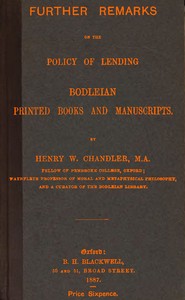
Further remarks on the policy of lending Bodleian printed books and manuscripts
Published in 1889, this short work is Henry W. Chandler's contribution to a fierce debate at the University of Oxford. It's less a story with characters and more a passionate, well-argued brief in a high-stakes policy dispute.
The Story
The 'plot' is straightforward. For over 250 years, the Bodleian Library operated under a strict, non-negotiable rule: no printed book or manuscript could be borrowed and taken out of the library. It was a treasure to be visited, not circulated. By the late 1800s, this policy was under attack. Reformers argued it was outdated and elitist, hoarding knowledge within Oxford's walls. Chandler, writing this pamphlet, fiercely defends the old rule. He lays out a point-by-point case, worrying about the inevitable loss and damage to irreplaceable texts, the administrative nightmare of tracking loans, and the belief that some institutions must serve as permanent, unchanging repositories of human thought.
Why You Should Read It
What grabbed me was how modern the tension feels. Chandler's fears about logistics and preservation are the same ones librarians today wrestle with for digital archives. But more than that, it's a crystal-clear window into a changing world. You can feel the anxiety of an old guard watching their controlled, orderly system of knowledge face the messy, democratic idea of wider access. His arguments are earnest, sometimes fussy, and completely convinced of their own rightness. Reading it, you're forced to pick a side. Is he a wise guardian protecting our heritage from carelessness, or a gatekeeper slowing down the spread of learning? The book doesn't answer that, but it frames the question perfectly.
Final Verdict
This is a niche read, but a rewarding one. It's perfect for history buffs who love social history, or anyone who geeks out on libraries, publishing, or the history of ideas. You'll also enjoy it if you like seeing how passionate, detailed arguments were made in a pre-internet age. It's not a beach read, but for a short dive into a very specific cultural battle, it's fascinating. You'll never complain about your library's loan rules again without thinking of Mr. Chandler and his 19th-century worries.
This text is dedicated to the public domain. It is available for public use and education.
Melissa Hernandez
9 months agoGreat read!
Matthew Walker
10 months agoI stumbled upon this title and the flow of the text seems very fluid. Truly inspiring.
Liam Smith
2 years agoI had low expectations initially, however the character development leaves a lasting impact. This story will stay with me.
Michelle Walker
1 year agoPerfect.







Matthew Garcia
10 months agoAmazing book.