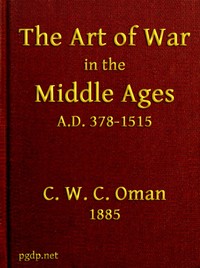
The Art of War in the Middle Ages A.D. 378-1515 by Charles Oman
The Story
Think of medieval history as one long, wild game of rock-paper-scissors between armies. Charles Oman’s The Art of War in the Middle Ages starts around A.D. 378, when Romans still used tight infantry ranks and barbarians were the wild cards. Then horsemen showed up—first the heavily armored cataphracts, then knights on towering destriers with lances that could punch through shields. The book walks you through battles like Hastings and Agincourt, where winning often boiled down to who ran away last.
Oman explains how fortifications became art—castles with concentric walls, murder holes, and trick doors that could bog down an army. He highlights the rise of pikemen and archers: schiltrons of Scottish spearmen that hacked down English nobility, and Swiss veterans who’d rather charge downhill than trade insults. Gunpowder arrives near the end, though early cannons were just fancy steam kettles that terrorized horses more than they killed men. The story is huge in scope but never feels bogged down—each battle teaches a lesson about cavalry versus infantry versus terrain.
Why You Should Read It
Because war today isn’t that different. Oman points out that a good general in 1200 C.E. shared the same basics you see in pro sports or corporate strategy: timing, intel, and trust. Commanders might’ve prayed to saints, but they handled logistics like a modern CEO preps a supply chain—sneaky supply convoys mattered more than a blessed sword. The medieval officers even used feigned retreats, waiting until the enemy broke order before launching real counterattacks.
The themes are heavy but handled lightly: jealousy over who got to lead, fear of foreign mercenaries behaving badly, or kingdoms ruined when bureaucrats ignored intelligence reports. You meet figureheads—Richard the Lionheart running around like a spark yet having to drag kingdoms into paying his bills. There’s incredible tactical detail on how heavy cavalry formation broke against steady infantry rows, like someone piloting a noble bulldozer into concrete. It makes you love the human problem of failure—like mangonels but nothing to aim at.
Final Verdict
If you devour Dune strategy or >The Campaigns of Alexander, this is your ladder to grittier history. Military students will get the craft without the dust. History nerds craving new insight on shield formations or why swords soldiers saved weight more with iron than magic elixirs will land perfectly. The writing lands as warm war doctrine yet fits 8th grade readiness—a true call from a smarter friend.
This book is widely considered to be in the public domain. Use this text in your own projects freely.