
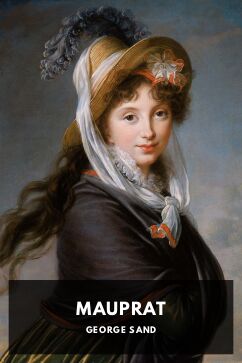
Mauprat - George Sand
George Sand's Mauprat is a novel that grabs you by the collar and doesn't let go. It's part historical adventure, part psychological study, and completely absorbing.
The Story
The tale is told by Bernard de Mauprat. He starts by describing his horrific childhood as part of the "Mauprat of Roche-Mauprat," a band of seven brothers who are essentially feudal thugs. Their life is one of ignorance and cruelty. Everything changes when they kidnap their cousin, the refined and educated Edmée de Mauprat. Bernard, the youngest, is tasked with guarding her. In a moment of desperation, Edmée promises to marry Bernard if he helps her escape. This promise becomes the central thread of the entire story.
After her rescue, Bernard is taken in by Edmée's father, the kindly Patrice de Mauprat of the other, respectable branch of the family. Here, the real drama begins. Bernard must painfully shed his brutish upbringing and learn to be a civilized man, all while nursing a deep, often frustrated love for Edmée. She, in turn, is torn between her sense of duty from that long-ago promise, her genuine desire to see Bernard improve, and her own independent spirit. Their rocky path is filled with misunderstandings, political intrigue (the backdrop is the pre-Revolutionary stirrings in France), a mysterious assassination attempt, and a gripping courtroom finale where everything hangs in the balance.
Why You Should Read It
What makes this book special is Sand's incredible understanding of her characters. Bernard isn't just a reformed villain; he's a painfully real man struggling with pride, anger, and a deep-seated insecurity about his own worth. Edmée is no passive heroine. She's intelligent, principled, and frustratingly opaque at times, which makes their relationship feel authentic and tense. Sand argues, through their story, that our character isn't fixed at birth—it's shaped by education, environment, and love. But she's also clear that change is a brutal, lifelong fight. The historical setting isn't just wallpaper; the ideas of the Enlightenment—reason, justice, social change—directly clash with the old-world brutality Bernard represents.
Final Verdict
Mauprat is perfect for readers who love historical fiction with real psychological depth. If you enjoyed the tortured romance of Wuthering Heights or the social critiques of Victor Hugo, you'll find a friend here. It's also a great pick for anyone interested in stories about self-improvement and second chances. Don't let the 19th-century publication date scare you off—Sand's prose (in a good translation) is direct, powerful, and surprisingly modern in its concerns. This is a hidden gem that deserves a spot on your shelf.
This publication is available for unrestricted use. Feel free to use it for personal or commercial purposes.









Richard Scott
1 year agoA bit long but worth it.