
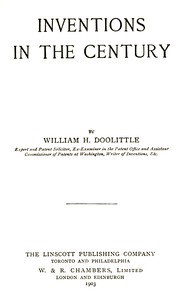
Inventions in the Century by William Henry Doolittle
Let's be clear from the start: this isn't a novel. There's no main character or plot twist in the traditional sense. But the 'story' it tells is the massive, chaotic, and brilliant transformation of daily life between roughly 1800 and 1900.
The Story
William Henry Doolittle takes us on a tour of the 19th century through its gadgets and breakthroughs. He organizes it by categories like transportation, communication, and industry. You'll read about the struggle to make steamships reliable, the battle to lay telegraph cables across oceans, and the incremental improvements that turned bicycles from awkward 'bone-shakers' into a global craze. He doesn't just present facts; he gives context. You learn about the failures, the rival inventors, and the public's skepticism. The 'conflict' is humanity's bumpy race to modernize, filled with both spectacular triumphs and comical dead-ends.
Why You Should Read It
What makes this book special is Doolittle's voice. He was writing just after this century of change, so his amazement is fresh. He's not a detached historian; he's a guy showing you all the cool new stuff. Reading it, you feel the weight of what these changes meant. The chapter on the telegraph isn't just about Morse code—it's about the world suddenly getting smaller. My favorite parts are the little details, like how the sewing machine revolutionized home life and clothing, or the early concerns about trains causing nausea. It grounds huge historical shifts in everyday experience.
Final Verdict
This is a perfect pick for history buffs who prefer stories to statistics, or for anyone who enjoys shows like 'Connections' or 'How We Got to Now.' It's also great for writers or creators looking for inspiration from real-world innovation. If you want a strict, critical academic analysis, look elsewhere. But if you want to time-travel with a knowledgeable and passionate guide to an era of unbelievable change, Doolittle's century-old enthusiasm is still contagious. Just be ready for some old-fashioned phrasing—it's part of the charm.
This content is free to share and distribute. It is available for public use and education.
Jennifer Smith
1 year agoRecommended.
Lucas Young
1 year agoPerfect.
Jessica Martinez
1 year agoGreat reference material for my coursework.
Richard Thomas
1 year agoA bit long but worth it.


Mason Smith
1 year agoGood quality content.