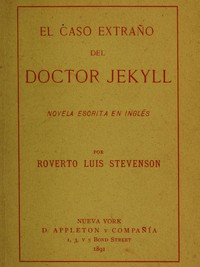
El caso extraño del Doctor Jekyll by Robert Louis Stevenson
Let's talk about one of the most famous stories ever written, but let's strip away the cartoons and movies. At its core, this is a mystery told by a lawyer, Mr. Utterson.
The Story
Utterson's friend, the brilliant and charitable Dr. Henry Jekyll, has started acting strangely. He's closed himself off in his lab and, most worryingly, has changed his will to leave everything to a man named Edward Hyde. This Hyde is a repulsive, cruel figure who tramples a child in the street and commits a shocking murder. Everyone hates him, but Jekyll protects him fiercely. Utterson is convinced Hyde is blackmailing his friend, but he can't figure out why or how. The truth, revealed through letters at the very end, is the shocking twist we all know now but was a bombshell in 1886: Jekyll and Hyde are the same person. A potion Jekyll created separates his good and evil sides, letting Hyde run free. But the experiment spirals out of control. Hyde starts appearing without the potion, and Jekyll is losing the ability to change back. The man is literally being consumed by his own dark half.
Why You Should Read It
What grabs me isn't the Gothic horror, but the deep, personal horror. Stevenson isn't just writing about a monster; he's writing about a man at war with himself. We all have impulses we suppress—a mean thought, a selfish desire. Jekyll's fatal mistake was believing he could neatly cut that part away and play with it. The book shows the terrifying cost of that arrogance. The 'good' Jekyll isn't so innocent either; he enjoys the freedom Hyde's actions give him. That complexity is what makes it timeless. It’s also a masterclass in pacing. The slow, creeping dread as Utterson pieces things together is more unsettling than any jump scare.
Final Verdict
This book is perfect for anyone who loves a tight, psychological thriller. If you enjoy stories that explore the dark corners of the human mind, like Frankenstein or modern crime novels about fractured identities, you'll find the original blueprint here. It's also a great pick for classic literature newcomers because it's short, direct, and the central idea is so powerful it still feels fresh. Just be warned: after reading it, you might take a second look at your own reflection.
This title is part of the public domain archive. It is available for public use and education.
Charles Moore
2 years agoNot bad at all.
Linda Harris
1 year agoMy professor recommended this, and I see why.
Barbara Walker
7 months agoThanks for the recommendation.
Susan Wright
1 month agoSurprisingly enough, it provides a comprehensive overview perfect for everyone. Highly recommended.

Amanda Scott
1 year agoIf you enjoy this genre, the storytelling feels authentic and emotionally grounded. Exactly what I needed.