
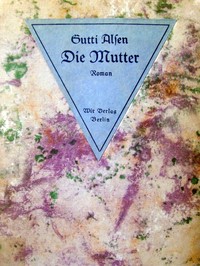
Die Mutter: Blätter aus dunklen Tagen by Gutti Alsen
Gutti Alsen's 1907 novel is a quiet storm of a book. Written over a century ago, it doesn't feel dusty or distant. Instead, it feels like a raw nerve, exposed on the page.
The Story
The plot is deceptively simple. A mother, whose entire identity and joy are wrapped up in her young child, faces the unthinkable: the child's death. The book is structured as a series of 'pages' or fragments from her life in the aftermath. We don't get a sweeping epic of her whole life. We get the immediate, jagged pieces. We see her in her empty home, haunted by silence where there was once laughter. We follow her as she tries, and fails, to reconnect with a world that has moved on. Her marriage strains under the weight of a grief they can't share in the same way. Every object, every room, every memory becomes a landmine. The story is her internal battle, a slow unraveling as the foundation of her existence is ripped away.
Why You Should Read It
This book gripped me because of its brutal honesty. Alsen doesn't romanticize grief or offer easy comfort. She shows it as a form of madness, a solitary confinement of the soul. The mother's pain is so specific, yet it echoes a universal fear. What I found most striking was how it portrays the isolation of profound loss. Even surrounded by people, she is utterly alone in her experience. It's a stark look at how society in that era (and perhaps still today) had no real script for a woman's grief outside of her role as a mother. The writing is sparse and intense, which makes the emotional impact even stronger. It's not about fancy words; it's about laying a feeling bare.
Final Verdict
This book isn't for someone looking for a light or uplifting read. It's a heavy, emotional journey. But it's a profoundly worthwhile one. It's perfect for readers interested in early psychological fiction, for anyone who has appreciated the interior focus of writers like Virginia Woolf. It's also a fascinating read for those curious about women's lives and mental health at the turn of the 20th century, presented not as a history lesson but as a living, breathing crisis. If you're willing to sit with a character in her darkest hour, 'Die Mutter' offers a unforgettable and deeply human portrait of loss.
This digital edition is based on a public domain text. Access is open to everyone around the world.
Daniel Lopez
1 year agoTo be perfectly clear, the clarity of the writing makes this accessible. Exceeded all my expectations.

Dorothy Perez
1 year agoThe formatting on this digital edition is flawless.